"Doing our part to help reduce our dependence on fossil fuels (OIL)."
D&D Motor Systems
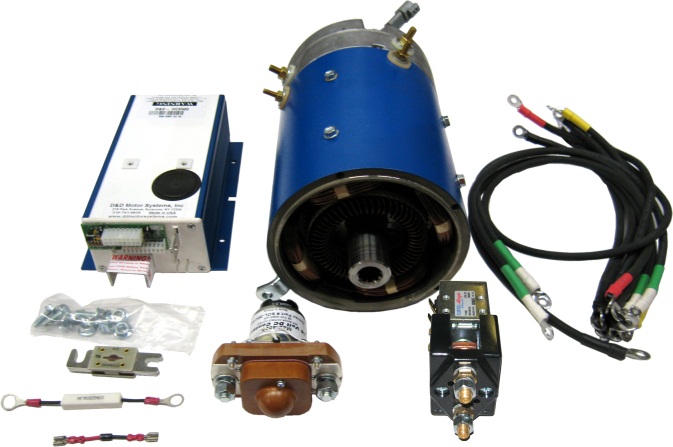
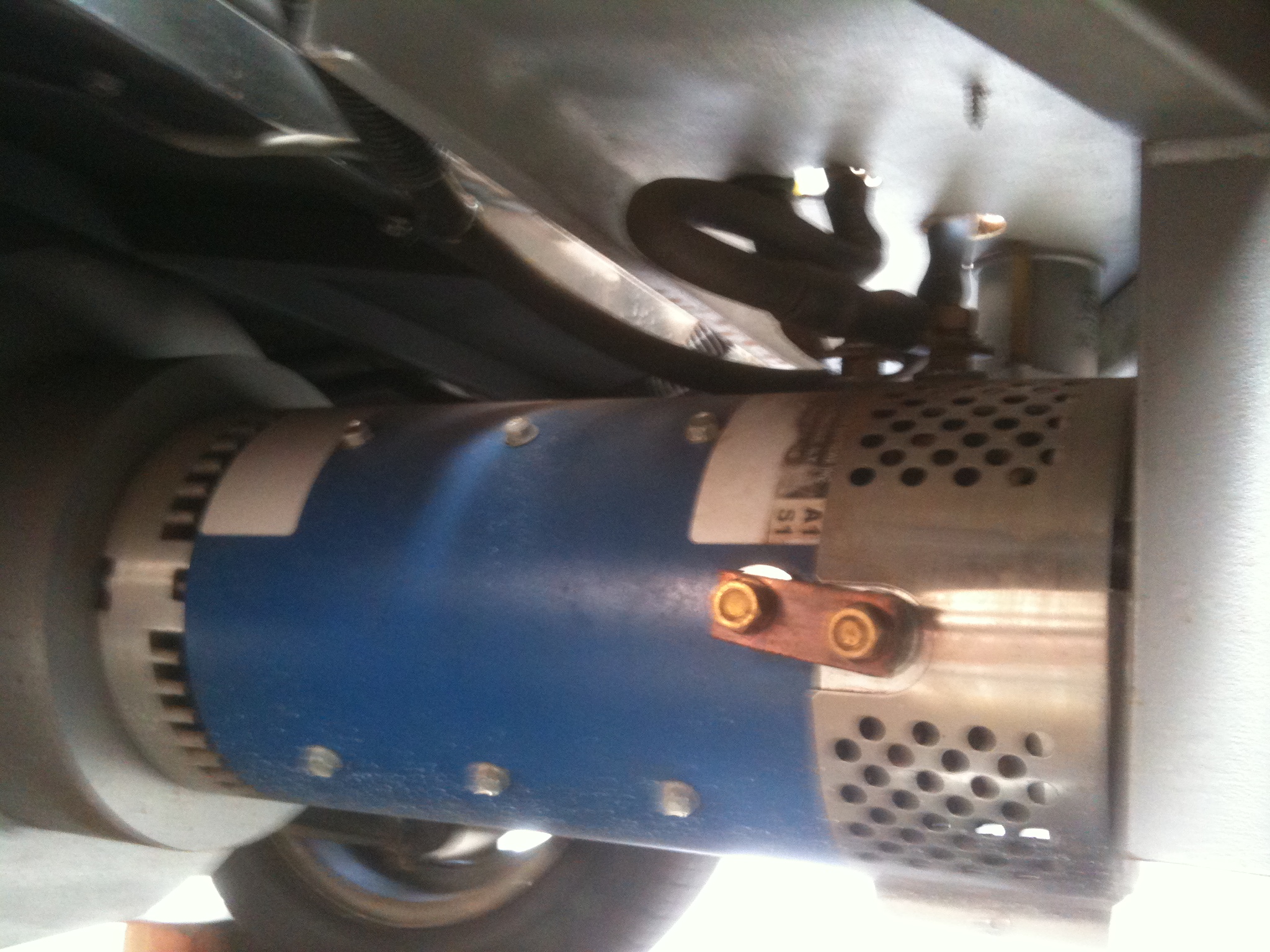
is the premier EV motor manufacturer in the U.S. for a small to medium light-weight
EV conversion . In addition we offer a complete line
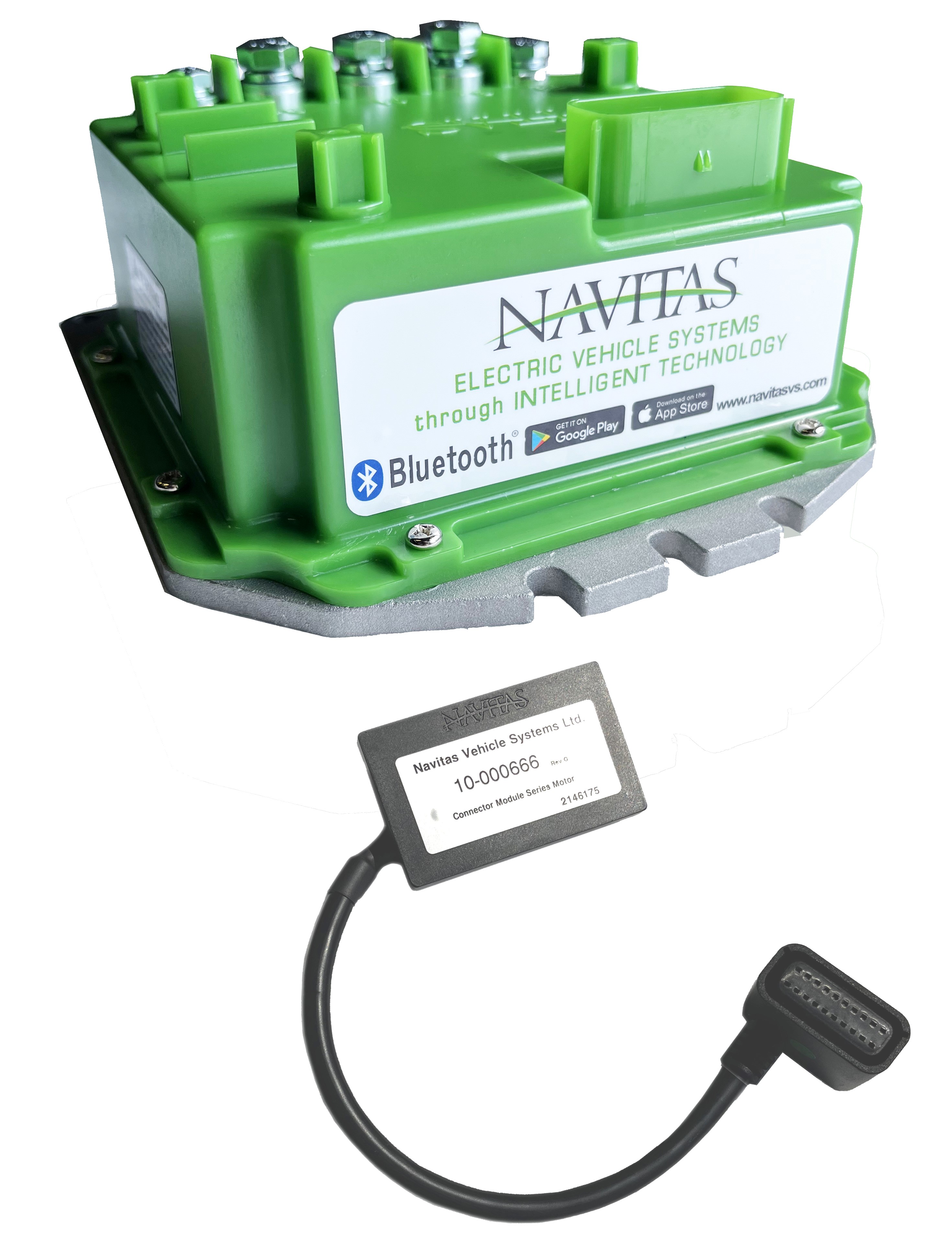
of U.S. made speed controllers to go with our high performance EV motors (motors for electric cars) .
Kick the oil habit now. It's a lot more practical than you think. This isn't
a dream of the future. With a little effort, electric vehicles (EVs) are
here today! At a cost you can afford! We have the best electric car motors for sale in the industry. Most economical EV motor for electric motor car conversion .
Popular Vehicles for EV Conversions
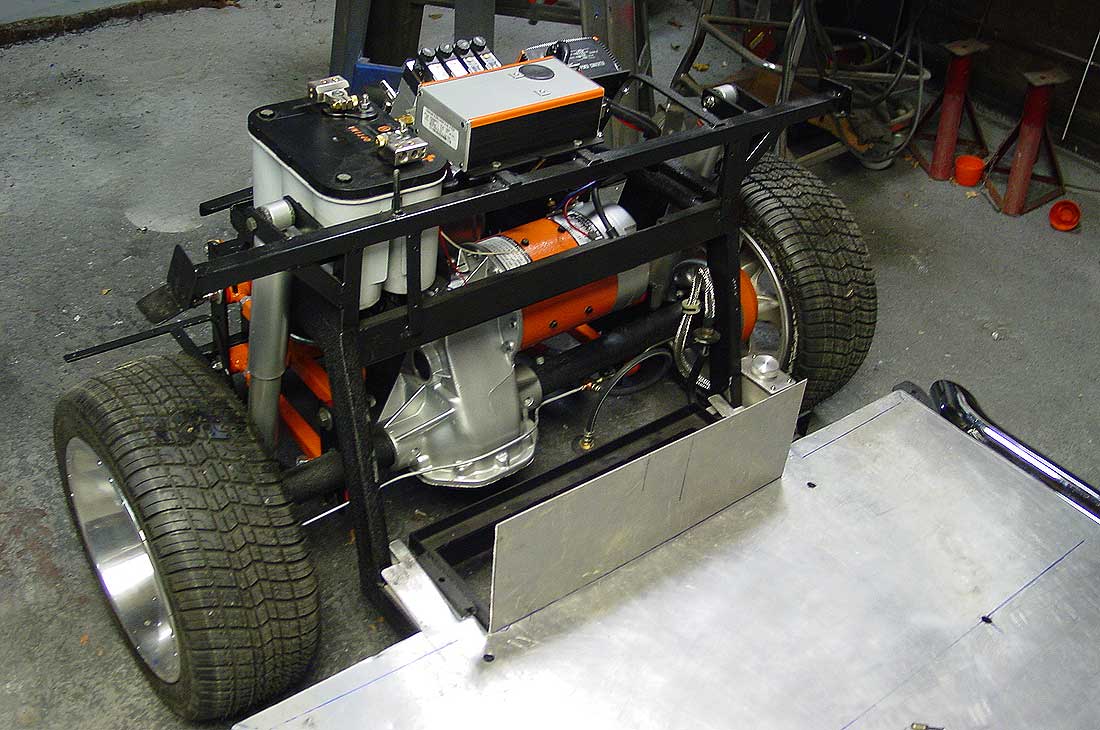
• The best candidates for EV conversion are typically small, lightweight vehicles
similar to the ones pictured below. Click to view details.
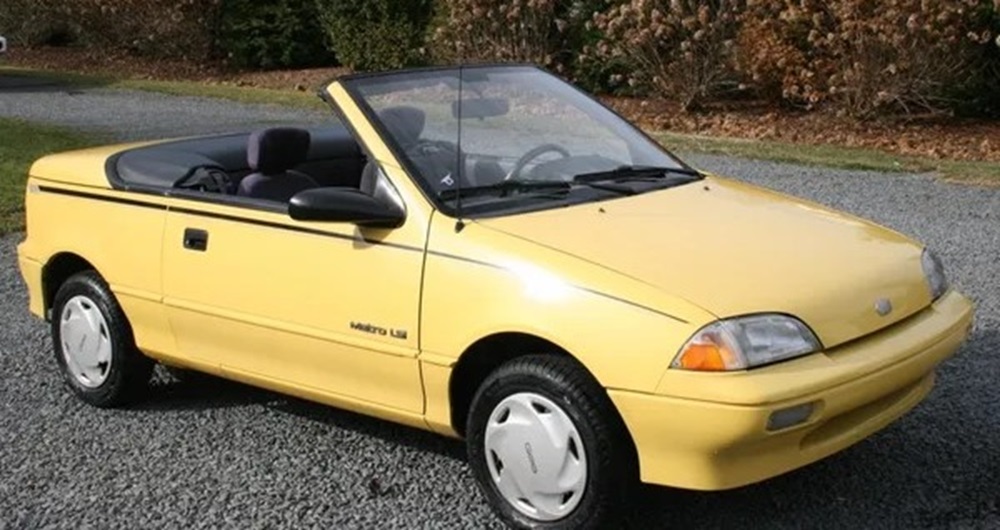
1991 Geo Metro
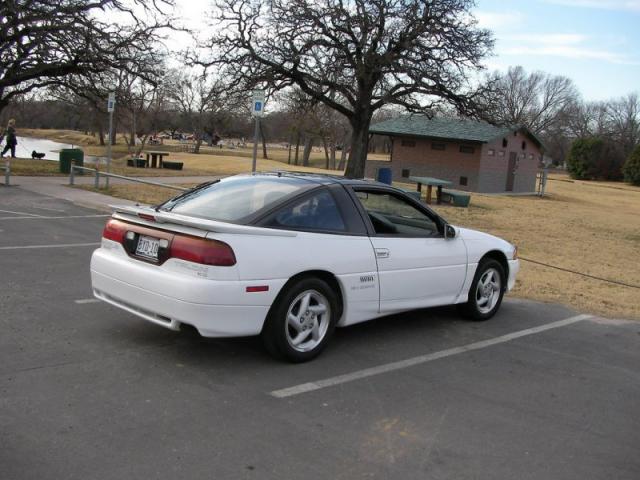
1993 Eagle Talon
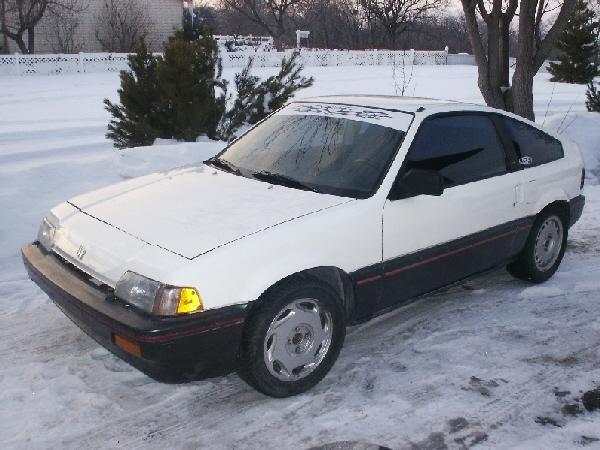
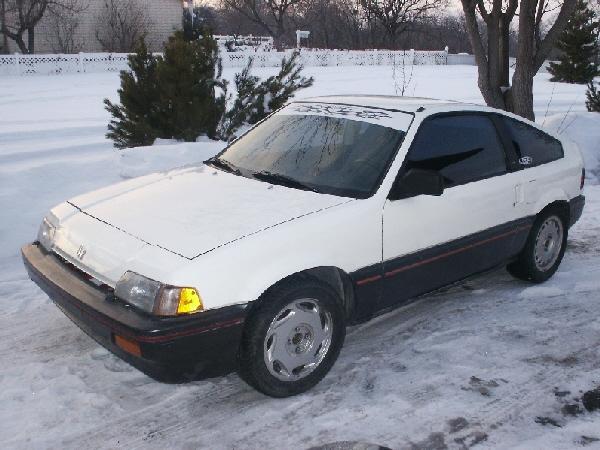
1986 Honda CRX
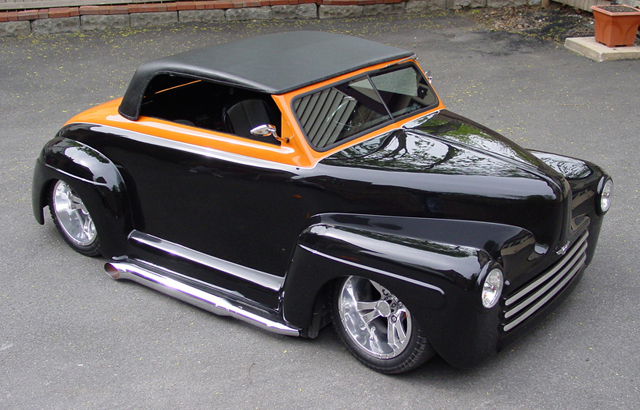
Custom Ford Coupe
1991 Geo Metro Convertible
Owner Ken Barbour Jr.
Owner's Other EV 2008 MINI E
Location Deptford, New Jersey
Web/Email http://www.eevc.info
Vehicle 1991 Geo Metro Convertible I drive this car daily back and forth from work in all kinds of weather and it performs perfectly.
Motor D&D Motor Systems, Inc. ES-31B 6.7 Series Wound DC 18 HP Continuous 49 Peak I've been very happy with this motor. It performs perfectly and barely gets warm. Im glad to see there is an alternative to more expensive offerings from Advanced and Netgain.
D&D people are great to deal with and shipped me my new bigger motor in 2 days. I absolutely reccomend them.
Drivetrain original transmission 4.39 gears in convertible transmissions, different than regular metro
Controller Curtis 1221C 120 volt 400 amp
Batteries 10 Everstart 27DC-6, 12.00 Volt, Lead-Acid, Flooded Wal-Mart's finest deep cycle 115ah Very easy to exchange for warranty issues. Made by Johnson controls or exide depending where you live.
System Voltage 120 Volts
Charger Manzanita Micro PFC20 Im lucky enough to have a really cool friend who lent me his pfc-20. This thing is awesome. Im still looking to buy a 120v charger. Anyone? Looking for russco,zivan,or manzanito.
Heater no point, the top is always down! looking into 110v recirculating tank heater to keep the windshield clear before leaving for work. Heater is on hold until it gets cold again.
DC/DC Converter yuasa battery tender for motorcycles no dc/dc converter, just a small motorcycle type battery charger for the car's original group 26 battery
Instrumentation 0-400 amp meter and 0-150 volt meter installed on dash
Top Speed 65 MPH (104 KPH) 65 mph on the highway easily, maybe more
Acceleration 13.8 seconds 1/8 mile measured in competition at Penn State. Alot better now on 120 volts than the 72 volts i was running. Im pretty sure its faster than a gas metro now.
Range 42 Miles (67 Kilometers) 42 miles at 35 mph. Measured in competition at Penn State. They use a 1 mile banked oval test track. This is with 10 new 27dc-6 batteries.
Watt Hours/Mile Usually pull around 100 amps going 35-45 mph
EV Miles Start: 91,429 Miles (147,109 Kilometers) Current: 94,300 Miles (151,728 Kilometers) Total: 2,871 Miles (4,619 Kilometers) As of 6/16/2009
Seating Capacity 2 adults and 7.15cu foot cargo (also measured in comp)
Curb Weight 2,100 Pounds (954 Kilograms) Now officially weighed using individual scales under each wheel. Very expensive looking scales used at competition. Right Front 540lbs Left Front 480lbs Right Rear 550lbs Left Rear 530lbs Not Bad!
Tires 155/80r13 1.4" taller than stock throws speedo off at least 5 mph
Conversion Time 12/24/07-04/03/07 a couple of nights after work and some Sundays, although its never truly finished
Conversion Cost Less than $4000 Including every little nut and bolt.
Additional Features I built this car myself in my garage at night after work. I built the adapter from a plate of aluminum and the coupler from a love-joy style coupler that i got at a farm store. I just bought a trailer that i will load up with batteries to make it to our monthly eecv meetings. Its over the bridge in plymouth meeting, pa and about 50 miles round trip. I could put more batteries in the car, but for 90 percent of what i do the range is fine. So the trailer will give me extra range only when i need it.
1993 Eagle Talon
Owner David Murray
Owner's Other EV 2002 Toyota Prius
Location Kennedale, Texas US
Web/Email http://galaxy22.dyndns.org/ev-talon/
Vehicle 1993 Eagle Talon Bought from an individual with blown engine for $750.
Motor D&D Motor Systems, Inc. ES-15a Series Wound DC 10 HP continuous, 40 peak.
Controller Kelly KD84600 24V-84V at 600 amps. (although it only pulls 300 ams from the batteries max.. I suspect a different controller would speed the car up some)
Batteries 9 Trojan T-875, 8.00 Volt, Lead-Acid, Flooded 3 in front, 6 in rear cargo area.
System Voltage 72 Volts
Charger KIPOINT Two chargers used. One is a 24V smart charger for front 2 batteries, and another 48V smart charger for rear batteries.
Heater None yet..
DC/DC Converter Not using one, I have a 12V AGM Wheelchair battery with its own seperate 2 amp charger that charges whenever the car is plugged in.
Instrumentation Custom instrument panel with seperate LED digital voltmeters for main pack, and 12V system. Also have a Paktrakr (heavily modified for dash with larger screen) and 3 temperature guages. All have backlights that come on when the lights are turned on.
Top Speed 54 MPH (86 KPH) Top speed is 54, but that is rarelly attainable unless you have a very flat or downhill road and it takes about half a mile or more to reach that speed. Steep hills can slow it down to as low as 25 mph.
Acceleration On flat ground:
0 to 20 in about 7 seconds
0 to 50 in about 40 seconds
If there are any hills, then it can be much worse.
Range 20 Miles (32 Kilometers) I get about 14 miles to 50% DOD. I have never taken it past that yet, but I would assume it could go to 20 miles to 80% DOD. I live in a very hilly area, bad for EVs. I imagine it would get better range in flat areas.
Watt Hours/Mile I don't know how to calculate this.
EV Miles Start: 192,228 Miles (309,294 Kilometers) Current: 192,635 Miles (309,949 Kilometers) Total: 407 Miles (654 Kilometers) As of 8/7/2008
Seating Capacity 4 adults. (although only practical for 2 adults and 2 children)
Curb Weight 0 I think the car weighs about what it did from the factory, except much of the weight has shifted to the rear.
Tires 205/55R16 inflated to 44 psi.
Conversion Time 100 hours so far
Conversion Cost $6,300 including vehicle.
Additional Features Working on electric Power Steering and Power Brakes. I have all the parts, just need to built brackets and hoses.
1986 Honda CRX
Owner Allen Grover
Location Salem, Utah US
Web/Email http://www.preparedness1.com/hondacrx1986.htm
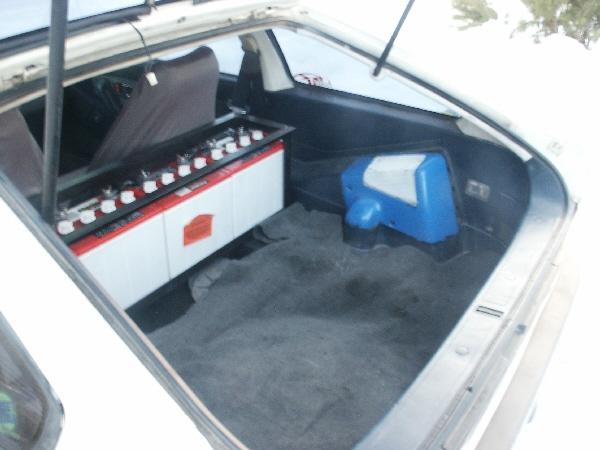
Vehicle 1986 Honda CRX This is a newly converted electric vehicle with a 5 speed transmission which has been built to be sold.
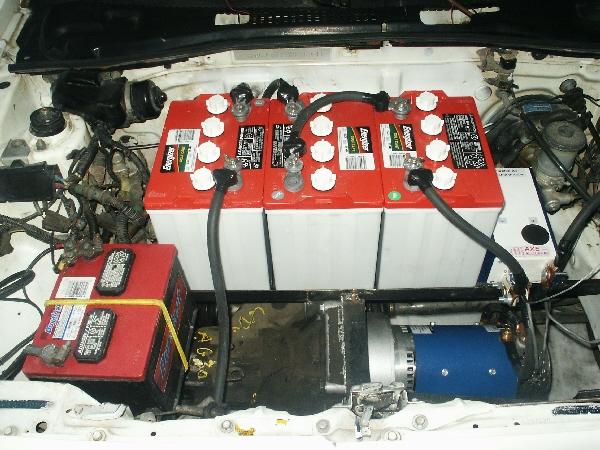
Motor D&D Motor Systems, Inc. #ES-15A Series Wound DC It is rated at twelve Horse-Power continuous and forty HP Peak at 72 VDC. It can be run as high as 144 VDC for higher HP. Weighs 62 lbs. and measures 6.7 " dia. x 12.28 " long.
Drivetrain Manual drivetrain but it is a clutchless system. Letting off on the accelerating pedal to shift is all is needed.
Controller Alltrax 7245 (24-72Vdc) 450amp Included in this kit is a state-of-the-art PWM (pulse width modulation) MOSFET (metal oxide semiconductor field effect transitor). and are fully programable. You can even monitor the motor parameters while driving using a laptop computer. For more information and software see their website.
Batteries 9 Energizer 001194, 8.00 Volt, Lead-Acid, Flooded 110 reserve capacity
System Voltage 72 Volts
Charger Schumacher SE-1072 5-10 amp (adustable voltage 12-72 VDC
It's not installed in the car but could be
Heater The car doesn't have a heater but you can get those propane ceramic heaters that are flameless that have 2000 BTU to 3000 BTUs of heat for around $60. Also you can use electric 12 volt heaters that plug into the cigaret lighter slot. The venilation ducts and fan still are workable if wanting to make for use.
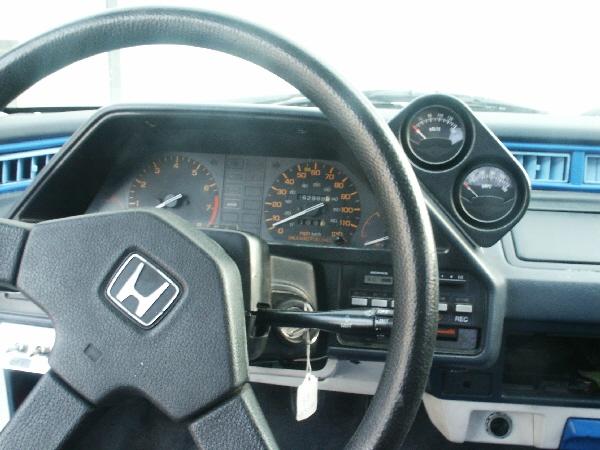
Instrumentation 0-150 VDC Volt Meter
50mv-500 amp Meter
Top Speed 50 MPH (80 KPH) Speeds up to 50 MPH can be reached, which is what I got with this car with recent testing. It will get between 25 to 50 miles on a charge depending on driving habit, your speed, etc. Faster speeds (55 to 60 MPH) can probably be obtained in warmer weather being that there is a 25% loss in efficiency with the batteries in cold weather which we are currently having. Also the brushes on the motor are new and once they are worn in it will pick up speed and range.
Acceleration Good acceleration up to 40 mph as a normal fuel engine would. Then up to 50 mph it takes a little more time.
Range 25 Miles (40 Kilometers) You can get range of 25 to 50 miles according to driving habits and many other factors; weight of car, how many batteries use and type, driving terrain, driving habits, etc. before having to recharge. One other thing is the less amps you use the farther the range you will get. You can control that by shifting to lower gears at the higher speeds. It works like an automatic, different than your normal shifting of a standard car. As the new batteries cycle through after 16 to 20 charges there will also be a noticeable difference in the range per charge.
Watt Hours/Mile 240 Wh/Mile If down shifting while maintaining higher speeds will maintain 100 amp draw.
EV Miles Start: 262,980 Miles (423,134 Kilometers) Current: 262,992 Miles (423,154 Kilometers) Total: 12 Miles (19 Kilometers) As of 2/2/2007
Seating Capacity 2 seats
Curb Weight 2,370 Pounds (1,077 Kilograms) This is the weight shown on the door.
Tires 1 spare tire
Additional Features 2 amp float charger included for accessory battery.
EV Quick Links
EV Conversion Experts
EV Photos
EV Videos
http://e-volks.com/index.html
http://www.cloudelectric.com/category_s/387.htm
http://www.evdrives.com/motors_overview_conversions.html
http://www.evpowersystems.com/products/products.htm
http://www.revconversions.com/
Car / Electric Vehicles (EV)Photo Gallery (Note: Click on thumb-nail image below for detailed spec's and additional pictures with a larger View)
Mitsubishi Eclipse
Owner Shaun
Location Delavan, Wisconsin US map
Vehicle 1998 Mitsubishi Eclipse
Motor D&D Motor Systems, Inc. Series Wound DC
Controller Alltrax 7245 pwm
Batteries 9, 8.00 Volt,
System Voltage 72 Volts
Heater Electric
Instrumentation Ammeter and Voltmeter
Top Speed 60 MPH (96 KPH)
Range 25 Miles (40 Kilometers) Depends on speed and driving conditions
Seating Capacity 4 adults
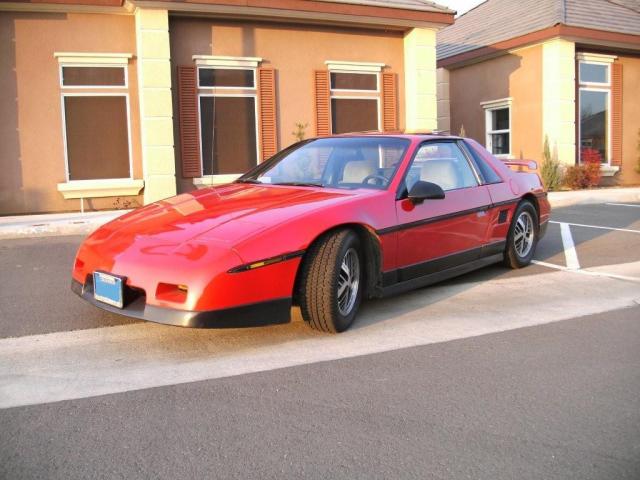
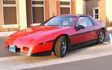
Pontiac Fiero 1986
Location Fresno, California US map
Vehicle 1986 Pontiac Fiero Ken, Patrick, & Jim
Motor D&D Motor Systems, Inc. ES-31B Series Wound DC
Drivetrain Stock 5 speed - clutchless
Controller Kelly 600 Amp
Batteries 12 US Battery 183 Amp Hour, 8.00 Volt, Lead-Acid, Flooded
System Voltage 96 Volts
Charger Quickcharge
Heater Ceramic heater
DC/DC Converter Kelly
Instrumentation GPS
Top Speed 55 MPH (88 KPH)
Acceleration It does ok up to about 35 mph then its slow from there
Range Not to sure on the range. Have had a lot of problem with it cutting in and out.
Seating Capacity 2 adults
Curb Weight 3,250 Pounds (1,477 Kilograms) GVWR weight is 3179 so I think I might beef up the suspension. Thinking about an air suspension.
Conversion Time 450+ hrs
Conversion Cost Up to about 6800
Additional Features Thomas vacuum pump for the brakes. Sony Cd player with MP3 for tunes.
Ford Probe GT 1995
Owner Fred Brown
Location Circleville, Ohio US map
Email
Vehicle 1995 Ford Probe GT This has always been my vehicle of choice because of aerodynamics and 4-wheel disc brakes. Besides, I love the body style (I have 3 others with ICE and automatic trannys). I found the perfect donor car early in the 1 year planning stage (blown motor, good glass, no rust, all power options worked) for $200.
Motor D&D Motor Systems, Inc. ES-15A Series (40 hp Peak, 12 hp Continuous) Series Wound DC This is the Wilderness Kit #2 motor for a VW. They wonder how I get 63 mph in a 3000 pound car.
Drivetrain Original 5-speed gear box with clutch removed. I shift through all 5 gears, letting up on the accelator to stop the E-motor between shifts and only use 5th on the highway for 55-65 mph.
Controller Alltrax 7245 (72 vdc/450 amp) I tinkered with the programming until I came up with what I think are the best settings for me.
Batteries 12 Energizer EGC2, 6.00 Volt, Lead-Acid, Flooded With a Sam's Club membership and dead cores I picked up locally (for free) they were just under $70 each.
System Voltage 72 Volts
Charger Delta-Q Technologies QuiQ 912-7200 After considering many options, I decided to go big-time and bought this SmartCharger. You just plug it in to a grounded 110v outlet and forget about it.
Heater Small ceramic heater/fan mounted on dash. Used basically for defrosting windshield.
DC/DC Converter None.
I decided to keep the 12v system seperate and backed up the standard 12v battery with two 6v in parallel. These also serve as "reserve power" in emergencies. The 12v system has its own Smart Charger that comes on with the big charger.
Instrumentation Currently anmeter and voltmeter. All stock gauges work (except gas, of course). Temperature gages are for the motor and controller.
I depend on the trip meter to know how much farther I can go.
Top Speed 65 MPH (104 KPH) The inner and outer belts of Columbus are fairly flat. Highway speeds in 5th gear fall to 50 mph on long slight grades up - and rise to 65 mph on the same grades returning home.
Acceleration 0-40 in 30 sec.(at 300+ amp draw) on a flat surface. I like the term someone else used...LEISURELY !
Range 35 Miles (56 Kilometers) From my house to my son's house it's 34 miles through the rolling hills of Southern Ohio. I've made that trip many times with no problems.
EV Miles Start: 104,430 Miles (168,027 Kilometers) Current: 105,780 Miles (170,200 Kilometers) Total: 1,350 Miles (2,172 Kilometers) Â Â Â As of 8/10/2010
Seating Capacity 2 adults and lots of trunk space.
Curb Weight 3,000 Pounds (1,363 Kilograms) I striped out about 800 pounds removing the ICE and other components.
The car now weighs 3123 pounds
Tires Stock 225/50R16's on aluminum rims. I know I could increase speed and distance with a lighter and more effecient set-up, but they look so-o-o good!
Conversion Time June through September 2008 (approx. 650 hours). I wanted to be on the road without gas by my 73rd birthday. Made it with a week to spare !!
Additional Features Emergency Kit:
Fire Extinguisher (don't leave home without it)
4 ft. #2 gauge Jumper (to bypass dead or burning batteries)
Open end wrench (to fit battery terminal bolts)
Safety Glasses
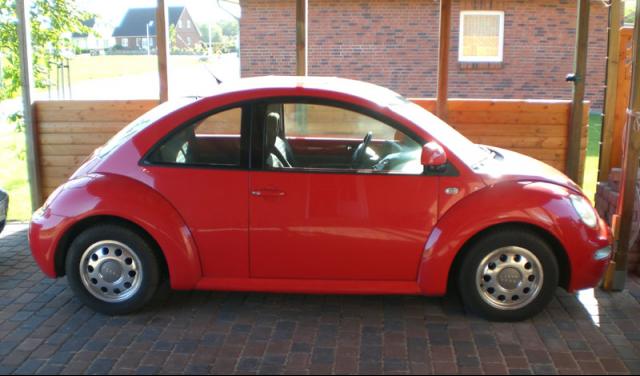
VW Beetle - New 1999
Owner Michael
Location Flensburg, Schleswig-Holstein Germany map
Web/Email WebPage
Vehicle 1999 Volkswagen New Beetle
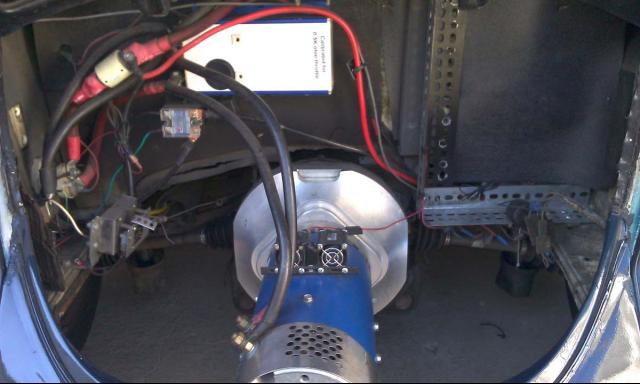
Motor D&D Motor Systems, Inc. ES-31B Series Wound DC 72V - 144V range
Drivetrain manual transmission, all gears are useable
Controller Curtis 1231C 2011/01/25: update to a Curtis 1231C, Curtis 1221C replaced
Batteries 45 Skyenergy SE 13 AHA, 3.30 Volt, Lithium-Ion LiFePo4 (145Ah measured)
2011/03/15: 7 additional cells (38 to 45)
System Voltage 148 Volts
Charger Zivan NG3 157,5V max. charge voltage (3.5V/cell)
13,7A
Heater MES-DEA RM4 3kW liquid heater
DC/DC Converter Chennic 144V Input: 120-156 VDC
Output: 12-13.8 VDC @ 30 A
Instrumentation Xantrex Link 10 (broken)
Top Speed 65 MPH (104 KPH) 50 mph (80km/h) is the most confort speed; a little less than expected
Acceleration ok but not a real "performance-monster"
Range 60 Miles (96 Kilometers)
Watt Hours/Mile 400 Wh/Mile with D&D ES-31B Motor:
25,8kWh/100km (415Wh/mi)average
18,99kWh/100km (306Wh/mi) best
Seating Capacity 4 adults
Curb Weight 2,820 Pounds (1,281 Kilograms)
Tires 195/65 R15 91H
Continental Eco Contact
Conversion Time start: 03.06.2009
own wheel driving: 18.07.2010
test license plate: 29.10.2010
goods vehicle test certificate: 01.12.2010
on street: 07.12.2010
Conversion Cost about 20.000 US Dollar
Additional Features Power Steering: Delphi Pump (Opel Astra G caravan)
Break Assistent: Vacuum Pump (Audi A4/A6)
Festo underpressure switch
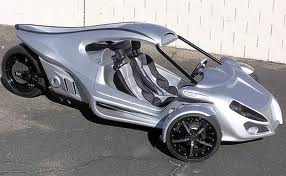
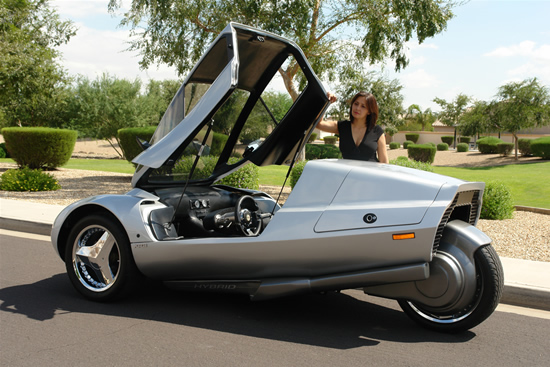
Tryckle 2008
Owner Tom Gamso
Owner's Other EV 1974 Yamaha TY Trials
Location Cape Coral, Florida US map
Web/Email WebPage
Vehicle 2008 Tryckle 3 wheeled electric powered motorcycle. Fiberglass body & chassis. Uses VW torsion front axle beam & steering. Sport bike frame, suspension, rear brake etc. as drive.
Motor D&D Motor Systems, Inc. Separately Excited DC
Drivetrain 72 volt with regen braking direct chain drive.
Controller Sevcon SEM Powerpak custom built heat sink with small 12v fan.
Batteries 6 Deka AGM deep cycle, 12.00 Volt, Lead-Acid, AGM 105 amp hours C-20 rating
also has 1-12v auxillary battery.
System Voltage 72 Volts
Charger Zivan NG-1 110v input
Heater none
DC/DC Converter Sevcon 300w 72v to 12v
Instrumentation PakTrakr, speedo, etc,
Top Speed 50 MPH (80 KPH)
Range 40 miles @ 40mph We have run the vehicle well over 400 miles,it's great!
Watt Hours/Mile 125 Wh/Mile
Seating Capacity 2 adults
Curb Weight 1,000 Pounds (454 Kilograms) net weight w/o riders
Tires 15" front 17" rear
Conversion Cost Kit price plus donor motorcycle frame $9,500
Additional Features molded fiberglass chassis(tub) and body.
1991 Geo Metro
Owner Dr. Larry Tillman
Location South Charleston, Ohio US map
Email
Vehicle 1991 Geo Metro Convertible, kind of sporty with the top down.
Motor D&D Motor Systems, Inc. D&D Series Wound DC 84 Volt
Drivetrain Stock 5-speed transmission
Controller Alltrax 7245 36/72 volt
Batteries 15 Everstart DC246, 12.00 Volt, Lead-Acid, Flooded deep cycle marine total weight of batteries-850 lbs.
System Voltage 84 Volts
Charger Schumacher 6 amp (7 chargers) 7, 6 Amp individual chargers - 1 for every 2 batteries
Heater 12 volt resistance still very cold in winter but it keeps the windshield clear. Better wear a coat.
DC/DC Converter none
Instrumentation Voltmeter
Ammeter
low voltage warning light on one battery that comes on if battery voltage drops to 10 volts in that monitored battery
Top Speed 70 MPH (112 KPH) right off the charger, but it likes 45-50 mph a whole lot better
Acceleration Pretty quick, but I got tired showing off at the light and needing to replace connectors.
Range 50 Miles (80 Kilometers) One day I managed 50 miles but I was going pretty slow. 30 is more realistic.
Watt Hours/Mile Don't know for sure but at the current rate of electricity in my area, it cost me about a penny per mile, or nothing if I charge off of the solar system at the house.
EV Miles Current: 18,000 Miles (28,962 Kilometers) Â Â Â As of 8/25/2008
Seating Capacity 2 adults
Curb Weight 1,900 Pounds (863 Kilograms) 850 lbs total battery weight
Tires Firestone SS 40 psi
Conversion Time 3 months, but still working and making changes
Conversion Cost $4,000 plus some change
Additional Features I have a 2 meter ham radio transceiver (KB8GJG)
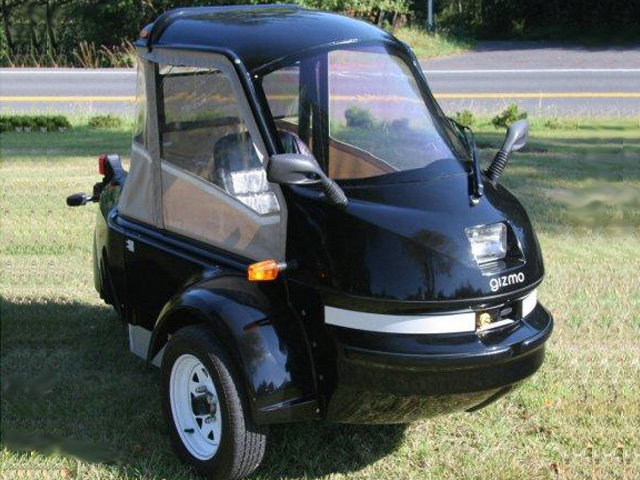
Gizmo
Owner Robert Veach
Location Naperville, Illinois US map
Web/Email WebPage
Vehicle Gizmo
Motor D&D Motor Systems, Inc. Separately Excited DC 15 HP peak,
Drivetrain belt drive
Controller Sevcon
Batteries 4, 12.00 Volt, Lead-Acid, Flooded 120 Ah
System Voltage 48 Volts
Charger Zivan
DC/DC Converter do not know
Instrumentation battery voltmeter
speedometer
Top Speed 45 MPH (72 KPH)
Acceleration 0 to 30 MPH in 6 seconds
Range 18 Miles (28 Kilometers)
Seating Capacity 1 adult
Curb Weight 320 Pounds (145 Kilograms) estimated
Tires steel belted radials
Additional Features I have added foot rests and a map reading light. I have also modified the forward/reverse switch to make it a little more user friendly.
1986 Honda Civic
Owner Lisa Korf
Location Austin, Texas US map
Web/Email WebPage
Vehicle 1986 Honda Civic Hatchback
Motor D&D Motor Systems, Inc. ES-15A Series Wound DC
Controller Alltrax
Batteries 9, 8.00 Volt, Lead-Acid, Flooded
System Voltage 72 Volts
Charger Schumacher
Top Speed 60 MPH (96 KPH)
Range 35 Miles (56 Kilometers)
EV Miles Start: 250,278 Miles (402,697 Kilometers)
Seating Capacity 2 in front, dogs on platform in rear
Conversion Time 1 month
Conversion Cost $7550
1992 Electric Tercel
Owner Michael Chamberlain
Location Pflugerville, Texas US map
Email
Vehicle 1992 Toyota Tercel
Motor D&D Motor Systems, Inc. ES-33 Series Wound DC 48-96V, 7/8" single-shaft, 6.7" Dia x 11.53" Long, 35 HP peak, 58 lbs.
Drivetrain 4 speed
Controller Curtis 1221C-7401 72-120V, 400 amp current limit, 11.5 lbs.
Batteries 12 Sam's Club U8VGC, 8.00 Volt, Lead-Acid, Flooded Made by Interstate, sold at Sam's 170AH. Length 10 1/4, Width 7 1/8, Height 11 1/3. Weight 65lbs.
System Voltage 96 Volts
Charger Quickcharge 72V-10A and Schumacher 24V Smart charger, good for Flooded, Gel or AGM.
Heater None
Instrumentation None
Top Speed 55 MPH (88 KPH) At 72 volts. 75 mph at 96 volts.
Acceleration Similar to original Tercel.
Range 35 Miles (56 Kilometers) Drive 24 miles to work. Recharge at work for 9 hours, then drive home.
EV Miles Start: 167,000 Miles (268,703 Kilometers) Current: 176,000 Miles (283,184 Kilometers) Total: 9,000 Miles (14,481 Kilometers)
Seating Capacity 2 adults and 2 kids.
Curb Weight 2,400 Pounds (1,090 Kilograms) Original weight 1950 pounds. Completely empty 1600 pounds.
Tires p155 80 R13
Conversion Time 12 months.
Conversion Cost $3500
Additional Features Added stronger springs to the rear to accommodate the extra weight. Added external cooling fan to the motor for summer driving.
1993 Kewet EL-JET3
Owner Ed Thorpe
Owner's Other EVs 1998 Honda EVplus 2000 Corbin Sparrow 2001 Xootr eX3 1973 Aurenthetic Charger 1998 Ford Ranger EV
Location Alameda, California US map
Email
Vehicle 1993 Kewet EL-JET3
Motor D&D Motor Systems, Inc. 72v, air cooled Series Wound DC Original motor was a Thrige-Titan 7.5 Kilowatt Series Wound DC (Danish make). Upgraded.
Drivetrain Originally Direct drive, gear reduction/differential. Upgraded with el-jet5 gearbox and axles.
Controller Cafe Electric Z1K-LV Original controller was a Curtis 1205 with plug braking.
Batteries 24 Saft STM 5-100 MR, 6.00 Volt, Nickel-Cadmium, Flooded Originally outfitted as 48v with Trojan T-125 Flooded Lead-Acid pack, upgraded.
System Voltage 144 Volts
Charger Manzanita Micro PFC-30 Originally 48v Zivan BC-1, upgraded. AVCON inlet to make use of public charging.
Heater electric
DC/DC Converter DC Power Systems
Instrumentation a) Speedometer/Odometer b) Battery SOC (10 led scale)
Top Speed 35 MPH (56 KPH) (still to be tested)
Range 50 Miles (80 Kilometers) (planned)
Seating Capacity 2 adults or 1 adult and 2 children
Curb Weight 1,400 Pounds (636 Kilograms)
Tires 145/80R13 (original)
Conversion Time Production EV (from Denmark), upgraded.
1993 Eagle Talon
Owner David Murray
Owner's Other EV 2002 Toyota Prius
Location Kennedale, Texas US
Web/Email http://galaxy22.dyndns.org/ev-talon/
Vehicle 1993 Eagle Talon Bought from an individual with blown engine for $750.
Motor D&D Motor Systems, Inc. ES-15a Series Wound DC 10 HP continuous, 40 peak.
Controller Kelly KD84600 24V-84V at 600 amps. (although it only pulls 300 ams from the batteries max.. I suspect a different controller would speed the car up some)
Batteries 9 Trojan T-875, 8.00 Volt, Lead-Acid, Flooded 3 in front, 6 in rear cargo area.
System Voltage 72 Volts
Charger KIPOINT Two chargers used. One is a 24V smart charger for front 2 batteries, and another 48V smart charger for rear batteries.
Heater None yet..
DC/DC Converter Not using one, I have a 12V AGM Wheelchair battery with its own seperate 2 amp charger that charges whenever the car is plugged in.
Instrumentation Custom instrument panel with seperate LED digital voltmeters for main pack, and 12V system. Also have a Paktrakr (heavily modified for dash with larger screen) and 3 temperature guages. All have backlights that come on when the lights are turned on.
Top Speed 54 MPH (86 KPH) Top speed is 54, but that is rarelly attainable unless you have a very flat or downhill road and it takes about half a mile or more to reach that speed. Steep hills can slow it down to as low as 25 mph.
Acceleration On flat ground:
0 to 20 in about 7 seconds
0 to 50 in about 40 seconds
If there are any hills, then it can be much worse.
Range 20 Miles (32 Kilometers) I get about 14 miles to 50% DOD. I have never taken it past that yet, but I would assume it could go to 20 miles to 80% DOD. I live in a very hilly area, bad for EVs. I imagine it would get better range in flat areas.
Watt Hours/Mile I don't know how to calculate this.
EV Miles Start: 192,228 Miles (309,294 Kilometers) Current: 192,635 Miles (309,949 Kilometers) Total: 407 Miles (654 Kilometers) Â Â Â As of 8/7/2008
Seating Capacity 4 adults. (although only practical for 2 adults and 2 children)
Curb Weight 0 I think the car weighs about what it did from the factory, except much of the weight has shifted to the rear.
Tires 205/55R16 inflated to 44 psi.
Conversion Time 100 hours so far
Conversion Cost $6,300 including vehicle.
Additional Features Working on electric Power Steering and Power Brakes. I have all the parts, just need to built brackets and hoses.
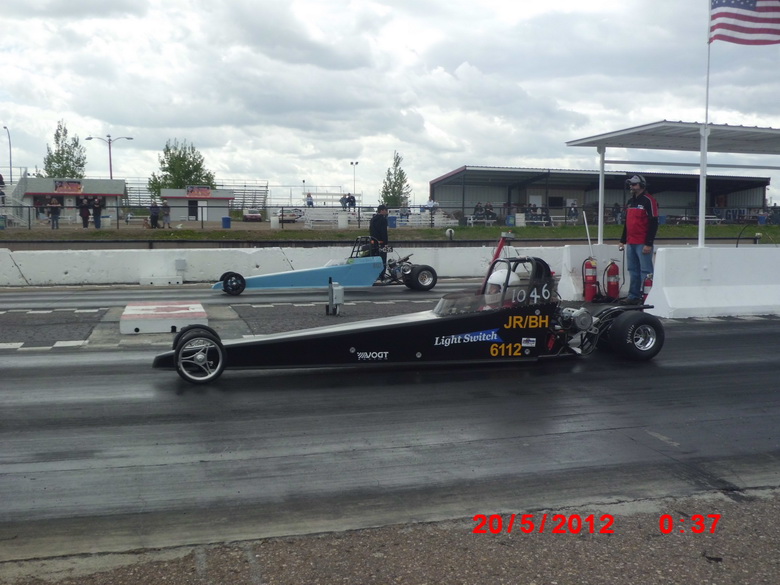
Dragster - ALL ELECTRIC
Dragster
Electric Dragster - Darrell Gwynn Foundation
Ford Festiva - 1992
Owner Lant Colburn
Location Cleburne, Texas US map
Email
Vehicle 1992 Ford Festiva
Motor D&D Motor Systems, Inc. E-31B Series Wound DC 6.7" single shaft series wound motor, rated at 18 HP continuous, 72 to 144 volts
Controller Curtis 1231C-8601 96-144VDC, 500 amps max
Batteries 45 Thunder Sky 100ah, 3.70 Volt, Lithium-Ion
System Voltage 144 Volts
Charger Elcon TCCH-144-2 5000 watt charger with lithium charging curve. Controlled by battery management system.
Heater none
DC/DC Converter Iota DLS-45 45 amp charger/converter. I have this installed as a charger that is completely separate from the traction pack.
Instrumentation only a computer connected to the BMS as this point
Top Speed 70 MPH (112 KPH) this is the top speed I have driven, but it acted as though it would go faster.
Acceleration 0-30 mph is pretty quick, but 30-60 is not exceptional.
Range 50 Miles (80 Kilometers) 50 miles is comfortable. 60 miles is possible, but discharges the batteries a bit too much
Watt Hours/Mile 225 Wh/Mile as a average
EV Miles Start: 129,370 Miles (208,156 Kilometers) Current: 130,190 Miles (209,475 Kilometers) Total: 820 Miles (1,319 Kilometers) Â Â Â As of 7/5/2011
Seating Capacity 2 adults and 2 small kids
Curb Weight 0 haven't gotten it to the scales yet
Tires stock 12"
Conversion Time 3 years - on and off
Conversion Cost around $16,000
Additional Features Elithion Lithumate Battery Management System.
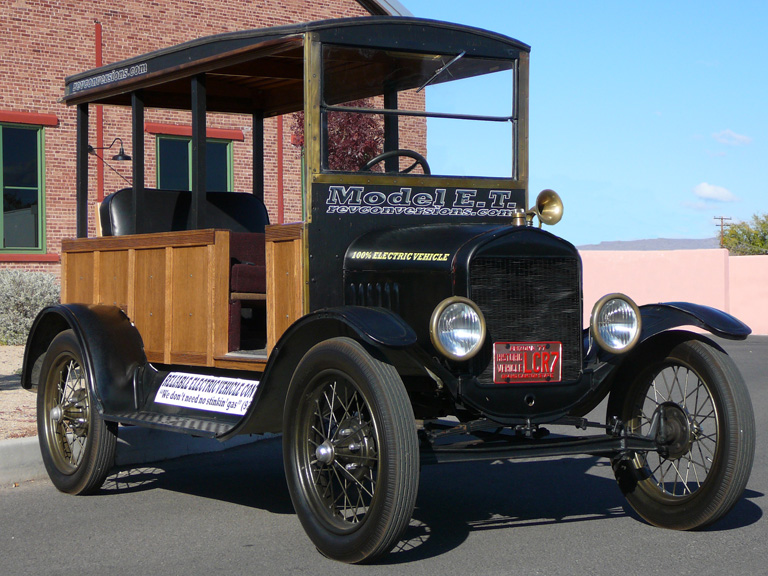
Model T Ford Electric
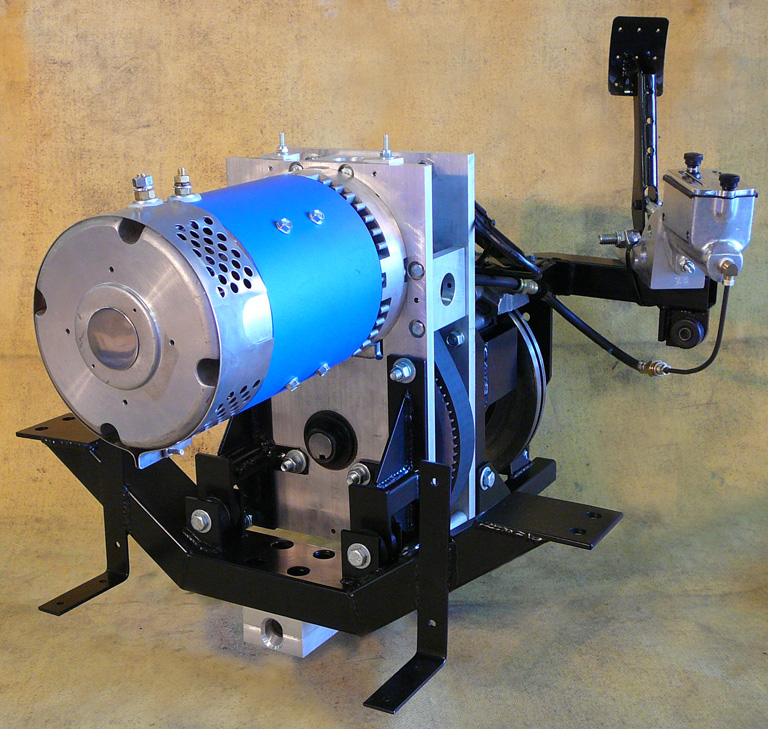
Model T Electric Drive Train Assembly
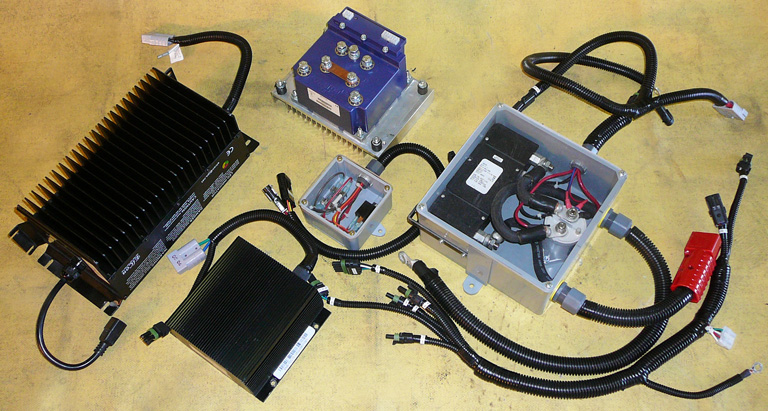
Model T Ford Controller Assembly
custom built high performance motors
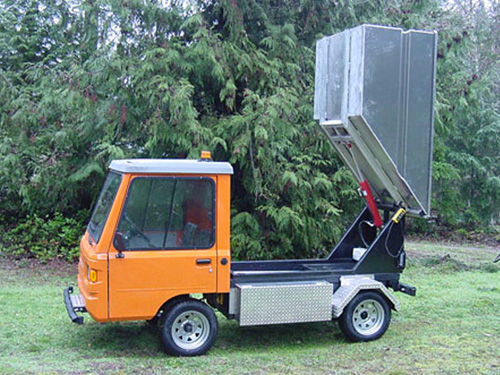
utility vehicle motor
electric vehicle motors
electric car conversion
motors ev
custom ev motor
electric dump truck motor
72 volt electric motor
hybrid vehicle motors
hybrid vehicle electric motors
electric motors for hybrid vehicle
hybrid vehicle electric motor system
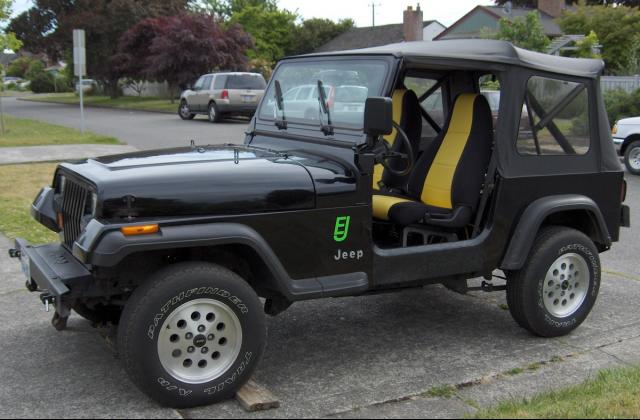
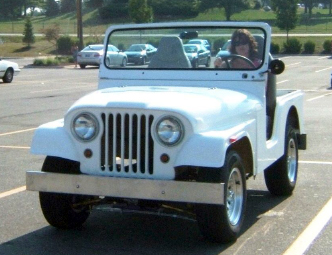
electric hybrid Jeep - EV Power Systems
hybrid Jeep - EV Power Systems
electric motors for hybrid Jeep - EV Power Systems
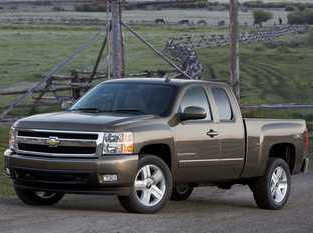
electric hybrid Silverado - EV Power Systems
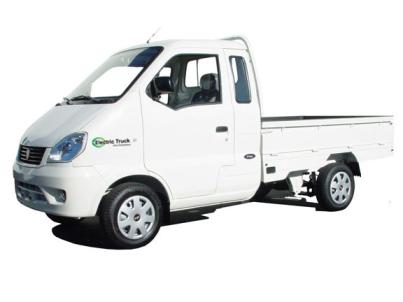
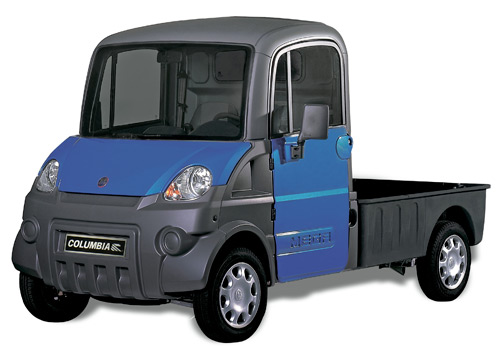
Electric MAG XC | electric utility vehicle motor
Columbia MEGA Cargo Bed | ev motor
ev conversion
electric car conversions
electric conversion for car
electric Honda
dc powered Honda
electric vehicle conversion
electric powered Honda
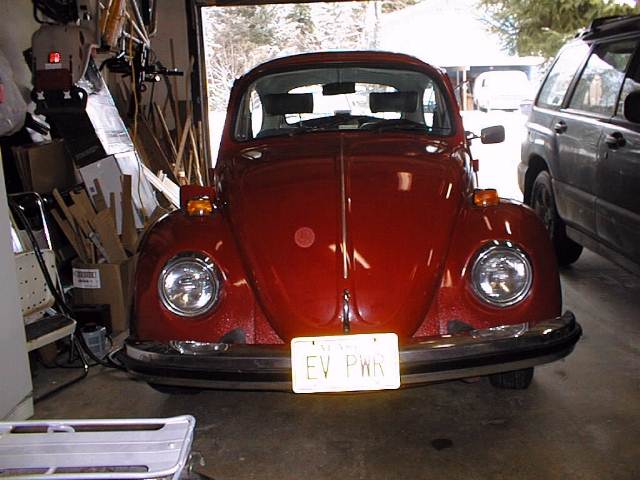
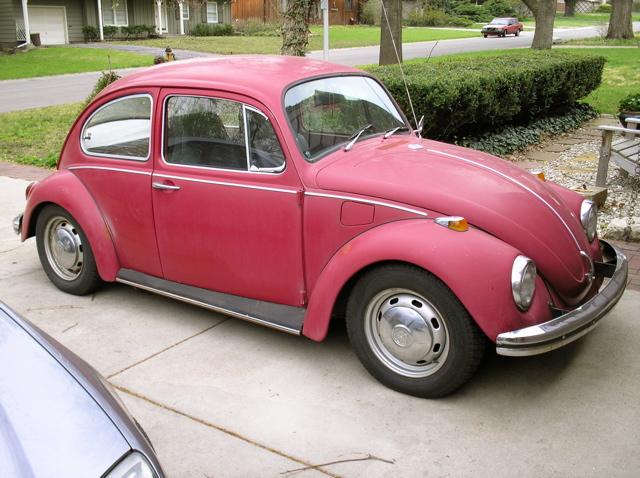
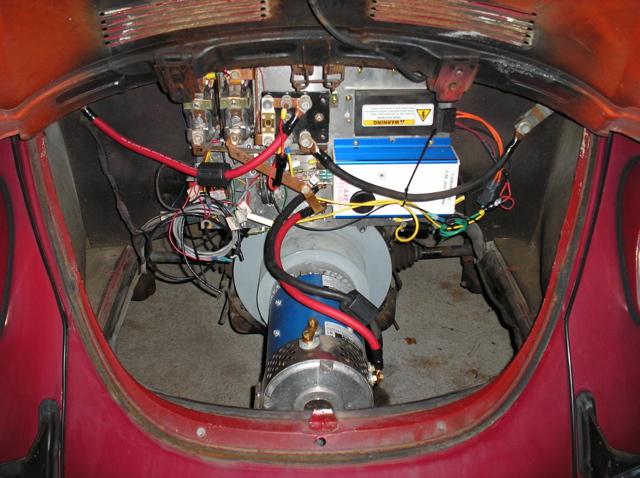
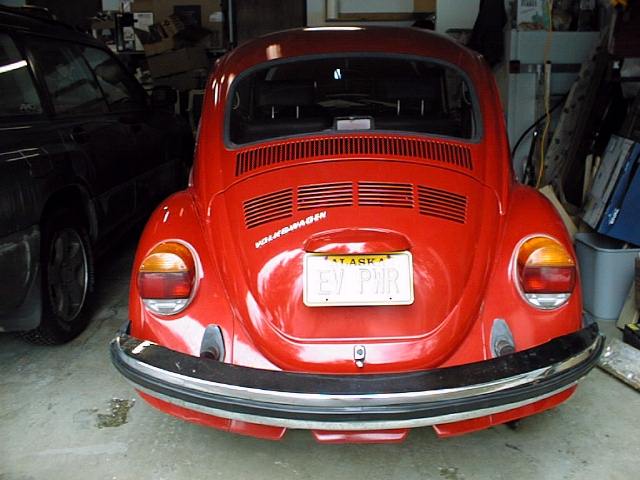
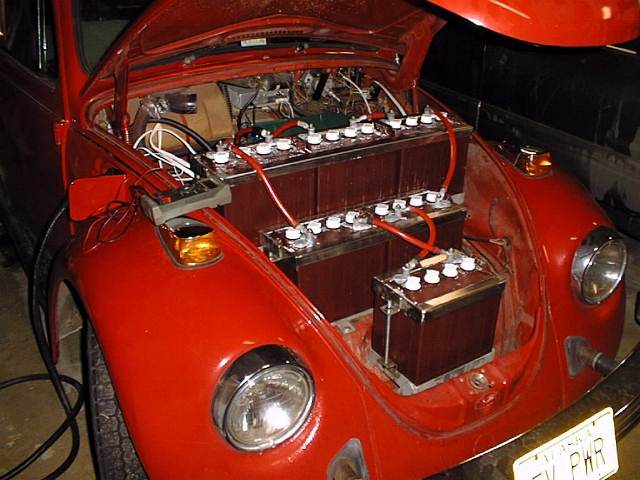
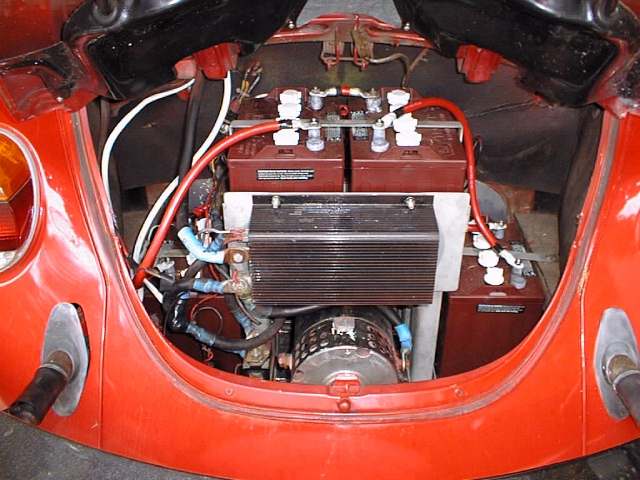
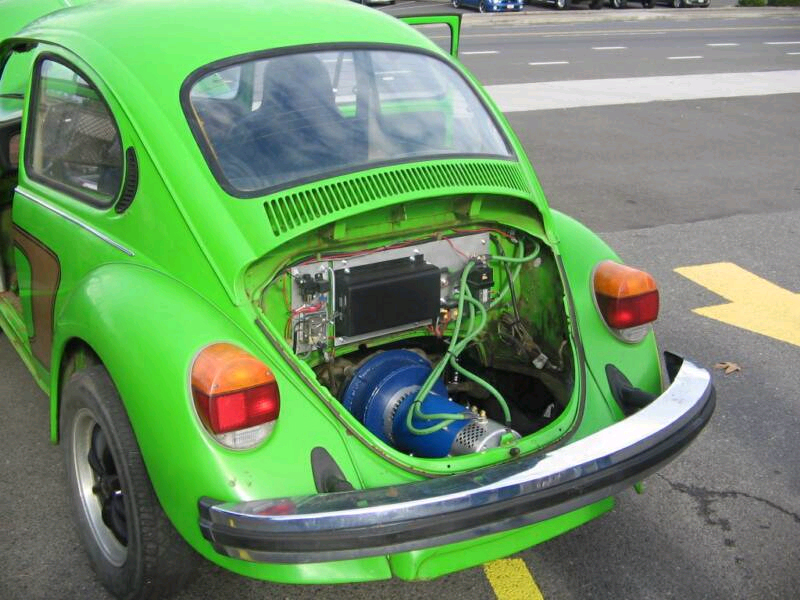
electric VW conversion
electric VW bug
electric volkswagon beetle
vw beetle electric conversion
electric VW beetle
ev motor | electric car motor
electric motors for cars | electric car motors
electric vehicle motor | electric car dc motor
EV motor | electric car motor
electric motors for sale | electric car motors
EV motor
ev motor, electric car motor
electric motor for car, ev motors
electric vehicle motors, ev motor
Electric Cars
Electric Cars
Electric Cars
Electric Cars
Electric Cars
All vehicles shown are:Powered By D&D Motor Systems . If you'd like to send us your Videos, click here for info.
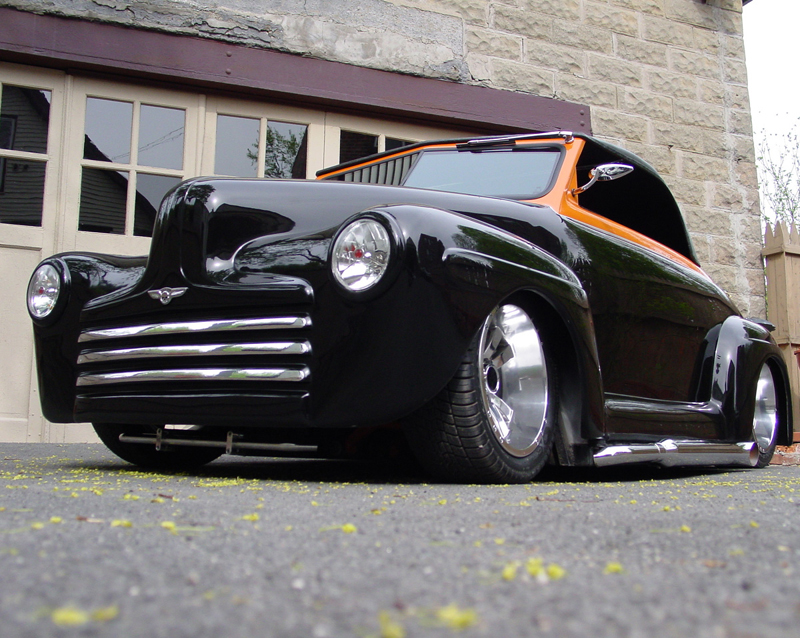
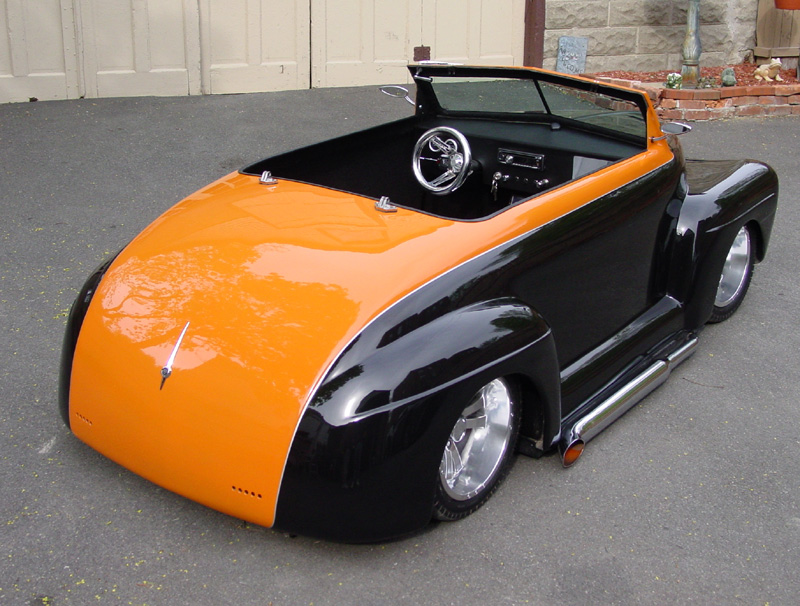
1948 Ford Coupe Replica VIDEO
Model T Ford Electric Conversion VIDEO
Electric Hybrid Conversions VIDEO
Hybrid Electric Motor System VIDEO
Jeep All Wheel Drive Electric VIDEO
Frequently Asked Questions - FAQs (click question to view answer)
1. Why build an EV?
Today there are limited production electric vehicles (EVs) available, so converting an existing internal combustion engine (ICE) vehicle to an electric vehicle (EV) might be the best choice available to obtain an EV . Building your own electric vehicle (EV) can be a rewarding and challenging experience. Not only will you be a pioneer in the EV movement, but you will also be recycling a car that may be headed for the junk yard. Don’t wait for Detroit. Custom build an EV yourself. A typical EV conversion will achieve a range of 30-60 miles for each charge. Studies have shown that 80% of commuters travel less than 40 miles per day, and 50% of commuters travel 20 miles (or less) per day. An EV conversion can meet those daily driving needs. EVs are a clean, efficient alternative to conventional vehicles – using technology that is readily available today! EVs produce zero emissions, and when you consider the full fuel cycle to generate electricity, are up to 99% cleaner than gasoline and diesel vehicles. EV owners enjoy the financial benefits of significantly lower fuel and maintenance expenses. Finally, EVs help reduce our dependence on oil. D&D Motor Systems does not provide complete electric vehicle (EV) conversion kits. We only provide the motor and controller . To obtain complete kits or other components go to our Links section and look under EV Conversions for potential suppliers.
2. What basic steps are involved?
A. Define the purpose of the vehicle. Ask yourself the following questions: • Why do you want an EV ? • Where will you drive it? • Who else will drive it? • How many miles do you require on a daily basis? • How often will you drive the vehicle? • With or Without passangers? • Will your employer allow you to charge at work? • How much do you want to spend? • How much time do you have for the conversions?
B. Evaluate the vehicles manufactured. When you start to evaluate the different vehicles, you will find there are mainly 2 classes out there: 1. Sports cars, such as the Honda CRX, Pontiac Fiero, Toyota MR2, Porsche 914, Fiat X-19, Nissan Pulsar, MGB or MG Midget. Sports cars have limited space and minimal payload capacity. 2. Passenger cars and vans, such as the Ford Escort, VW Rabbit, VW Beetle, Saturn, Honda Civic and Geo Metro. The payload capacity for a Geo Metro is about 600 lbs. Each of these classes have their own characteristics with respect to aerodynamic drag, curb weight, Gross Vehicle Weight Rating (GVWR), passenger compartment, and available space for batteries. Table 1 lists typical vehicles under each of these classes and their range using various lead acid battery packs (6V and 12V). Range is a function of battery weight because the battery represents the fuel. Typically it takes 15-20 lbs of lead to achieve 1 mile in range. A Rule of Thumb is that 1/3 of the EVs weight should be batteries; the other 2/3 represents dead weight (i.e. frame, suspension, body, motor, etc). If you could decrease this dead weight to 1/2 leaving 1/2 for fuel, you would have superior performance.
Table 1 VEHICLE ICE CURB WEIGHT VOLTAGE OF EV BATTERY MODELED CURB WT (LBS) AVG RANGE (MILES) SPORTS CARS Pontiac Fiero 2530 120 5SHP 3360 44 Honda CRX 2175 120 5SHP 3060 47 Toyota MR2 2695 144 SCS225 3430 40 Nissan Pulsar 2025 144 SCS225 2863 46 PASSENGER CARS Ford Escort 2300 96 T-145 3457 59 Geo Metro 1695 120 SCS225 2451 38 Honda Civic 2260 144 SCS225 3063 40 Saturn 2300 120 5SHP 3165 42 VW Rabbit 1930 96 T-105 2967 48 Notes 1. Calculations based on spreadsheet developed by Electric Vehicles of America, Inc. 2. Typically curb weight increases each model year. 3. Average range based on 1 percent grade at 50 mph - representing some traffic.
Other Considerations Front Wheel Drive(FWD) vs Rear Wheel Drive (RWD) A FWD vehicle has the advantage of being more efficient; which improves range. However, front wheel drive vehicles typically have smaller engine compartments, which limit the location of batteries. Also, the front -wheel drive vehicle requires more weight (typically 60 percent) on the front axle. If you locate batteries in the trunk, the tail can wag the dog in rain or snow. This is a problem with many Geo Metros with batteries in the trunk.
In addition, the high voltage, high amperage EV controllers and EV motors can produce greater torque and horsepower than the original engine in the smaller FWD vehicles. This can produce a problem. There are two distinct limitations for FWD vehicle. During launch (initial take-off from a standing start) all cars tend to pitch up (front rotates up relative to back.) This is because the center of mass is above the force being exerted by the tires against the road. In a RWD, this pitch tends to plant the driven tires more firmly against the road, thus enhancing traction. In a FWD the effect is opposite. The force pressing the drive wheels against the road is reduced because of the pitch. If power is applied while the car is in a turn, RWD is much more stable. If the rear wheels spin, the car over-steers. If the front wheels spin, the car under-steers and may easily spin out. Availability of Spare Parts - Age of Vehicle Spare parts should be available. This availability is related to the production of that specific vehicle and which part of the country in which you live. Also the availability of after market parts for suspension upgrades can be important. Manual Vs. Automatic Transmission
Most EV conversion vehicles are manual transmissions because they are more efficient than automatic transmissions and provide greater range, require less motor torque, require no transmission cooler, and are easier to convert. The problem with an automatic transmission is that it shifts at about 2000 rpm; the electric car motor is usually designed to operate efficiently between 4000-5000 rpm. Consequently, the automatic transmission is a poor choice which results in decreased range. If you buy a vehicle with an automatic transmission, you can replace it with a manual transmission. The additional cost is $150 and up depending on the transmission and used auto parts dealer. Consider trading the automatic transmission. Power Steering Power steering is not recommended because of the continuous power required of the battery system. Even on many of the trucks that get converted, most people eliminate the power steering. The cost to change from power steering to a manual steering box is under $100 and less than 1 hour of work. The equal weight distribution allowed reasonable manual steering. Power Brakes Power brakes are a definite advantage as you increase the weight of the vehicle approximately 800-1200 lbs with the EV parts . In many cases, this represents an increase of 2025 percent in the curb weight of the vehicle. Your goal should always be to have a safe vehicle. Power brakes unlike power steering are only an intermittent energy demand. A typical system requires a vacuum pump and a vacuum switch. Curb Weight Curb weight is the weight of the vehicle parked at the curb. No passengers and no payload. If you want to have 1/3 to 1/2 of the finished weight in fuel; then the initial curb weight of the vehicle should be less than 3000 lbs. The Geo Metro is one one the lighter vehicles with a curb weight of 1695 lbs. Consequently, an 800 lb battery pack seems ideal, except that GVWR and weight distribution become a major problem. GVWR and Distribution This is the most important consideration in any vehicle, because this directly affects the safety of the vehicle. As previously stated, converting an existing vehicle to an EV will add 800 - 1400 lbs in curb weight. Check the Gross Vehicle Weight Rating (GVWR) of the vehicle including the tires presently on the vehicle to see if it is designed for this increase. The GVWR and each axle rating are located on the drivers side door jamb. If the GVWR of the vehicle is exceeded, then the vehicle frame, suspension system, and braking system may be beyond their design value. Although the Geo Metro can perform with an 800 lb battery pack, the payload capacity of the vehicle is 600 lbs. Payload equals GVWR minus curb weight. With two people in the Geo, the available payload decreases to 300 lbs. Consequently, an 800 lb battery pack can lead to braking and handling (See FWD vs RWD above) as well as a long term fatique problem with the unibody. Therefore, the lightest vehicle is not always the best vehicle. You must also consider where the EV components will be located. Where will the batteries be located; they are the bulk of the additional weight. Will the charger be carried onboard or offboard? How will this change in weight distribution affect the vehicles handling? In the 1973 VW, the majority of weight was on the rear wheels; this was great for snow.
C. Select a Vehicle to Convert D. Look for an EV Kit for the vehicle you choose Kits will make the conversion significantly easier - they include all the parts, except batteries. A conversion kit will cost about $3,000 - $6,000 and the batteries, depending on how many you need, can cost from $700 - $4,000 , depending on the type you choose. E. Gather the proper tools for the job Make sure you have access to the proper tools and supplies, and a place to do the conversion. You may need to rent equipment like engine hoists and contract out welding work. Contact EV veterans for advice and assistance.Go to our Links page, and look under Electric Vehicle Conversions. F. Familiarize yourself with the EV parts The most common batteries for EV conversions are lead-acid batteries, specifically, 12-volt sealed batteries. G. Saftey Any project involving automobiles and tools has inherent risks. Be aware of these possible hazards to prevent damage to the vehicle and serious injury to you. H. Remove ICE components Remove any ICE (Internal Combustion Engine) components, making room for the EV parts . I. Install EV components Install the motor, components, battery box, and batteries. Install the wiring for propulsion (traction pack), auxiliary power system (12-volt system), and traction pack charging system, and displays and controls. J. Safety Testing Test the battery charger; check the wiring and fuses, connections. Then take it out for a spin and notice the quiet, smooth ride. Be sure to show it off!
3. How much will a typical Conversion Cost?
Not counting the cost of the donor vehicle, you will spend between $4,000 and $9,500 . It depends on the type of vehicle you are converting, which determines the size motor, controller and number of batteries. The total cost also depends on how much metal work you can do yourself.
4. How much will I save on gas?
Gas Guzzler - Assumptions Milage: 20 miles/gallon Cost Per Gallon: $4.00 (US Ave.) / gallon Cost Per Mile: $0.20 / mile Clean Electric - Assumptions Electricity Cost: $0.07 / kWHr (Kilowatt Hour) Recharge Cost: Aprox. $0.84 / charge (12 Kw-hr / Charge) Vehicle Range: Aprox. 50 miles / charge Cost Per Mile: 1.68 cents / mile Savings - Assumptions Savings Per Mile: ($0.20 - $0.0168) = $0.1832 / mile Annual Miles Driven: 12,000 miles / year Annual Savings: $2,198.40 Per Year * Annual Savings Do Not Include the reduction in annual maintenance expenses! So, you could save more than estimated above.
5. Which vehicles are the most commonly used for conversions?
Vehicles most often converted have a 4 cyl. engine and a manual transmission. Heres a list of some of the most common: • VW - Bug or Beetle, Jeta, Golf, Rabbit, Scirocco • Dodge - Colt, Shadow, Rampage, Daytona • Ford - Escort and Ranger • Porche 914 • Honda - Civic • Datsun Pickup • Plymouth - Sundance • Pontiac - Fiero • Geo - Metro
6. What driving range can I expect per charge?
Of course it all depends on the conversion – vehicle type along with the number and type of batteries. However, most people who drive electric street vehicles say they get between 30 and 60 miles per charge , without saying what they mean by charge . I believe it is only reasonable to state the range based on a 50% drop in charge capacity. You can go lower, but repeatedly going down to 40% and less capacity (remaining capacity) point will shorten the life of the batteries. Keep in mind that driving habits impact distance. For more detailed information regarding vehicle range, go to FAQ #2 - Section B, above.
8. How do electric cars work?
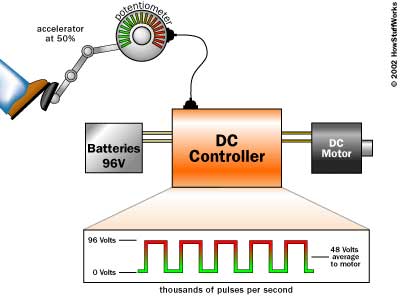
Electric cars are something that show up in the news all the time. There are several reasons for the continuing interest in these vehicles: • Electric cars create less pollution than gasoline-powered cars, so they are an environmentally friendly alternative to gasoline-powered vehicles (especially in cities). • Any news story about hybrid cars usually talks about electric cars as well. • Vehicles powered by fuel cells are electric cars, and fuel cells are getting a lot of attention right now in the news. An electric car is a car powered by an electric car motor rather than a gasoline engine. From the outside, you would probably have no idea that a car is electric. In most cases, electric cars are created by converting a gasoline-powered car, and in that case it is impossible to tell. When you drive an electric car, often the only thing that clues you in to its true nature is the fact that it is nearly silent. Under the hood, there are a lot of differences between gasoline and electric cars: • The gasoline engine is replaced by an electric motor . • The electric motor gets its power from a controller . • The controller gets its power from an array of rechargeable batteries . Inside an Electric Car The heart of an electric car is the combination of: • The electric motor • The motor controller • The batteries A simple DC controller connected to the batteries and the DC motor. If the driver floors the accelerator pedal, the controller delivers the full battery voltage to the motor. If the driver takes his/her foot off the accelerator, the controller delivers zero volts to the motor. For any setting in between, the controller chops the battery voltage, thousands of times per second to create an average voltage somewhere between 0 and Full Battery pack voltage. The controller takes power from the batteries and delivers it to the motor. The accelerator pedal hooks to a potentiometer (variable resistor), and this potentiometer provides the signal that tells the controller how much power it is supposed to deliver. The controller can deliver zero power (when the car is stopped), full power (when the driver floors the accelerator pedal), or any power level in between. The controllers job in a DC electric car is easy to understand. Let us assume that the battery pack contains 12 12-volt batteries, wired in series to create 144 volts. The controller takes in 144 volts DC, and delivers it to the motor in a controlled way. The very simplest DC controller would be a big on/off switch wired to the accelerator pedal. When you push the pedal, it would turn the switch on, and when you take your foot off the pedal, it would turn it off. As the driver, you would have to push and release the accelerator to pulse the motor on and off to maintain a given speed. Obviously, that sort of on/off approach would work but it would be a pain to drive, so the controller does the pulsing for you. The controller reads the setting of the accelerator pedal from the potentiometers and regulates the power accordingly. Say that you have the accelerator pushed halfway down. The controller reads that setting from the potentiometer and rapidly switches the power to the motor on and off so that it is on half the time and off half the time. If you have the accelerator pedal 25 percent of the way down, the controller pulses the power so it is on 25 percent of the time and off 75 percent of the time. Most controllers pulse the power more than 15,000 times per second, in order to keep the pulsation outside the range of human hearing. The pulsed current causes the motor housing to vibrate at that frequency, so by pulsing at more than 15,000 cycles per second, the controller and motor are silent to human ears. Most DC controllers used in electric cars come from the electric forklift industry. Electric Car Motors & Batteries If the motor is a DC motor, then it may run on anything from 96 to 192 volts. Many of the DC motors used in electric cars come from the electric forklift industry. DC installations tend to be simpler and less expensive. A typical motor will be in the 20,000-watt to 30,000-watt range. A typical controller will be in the 40,000-watt to 60,000-watt range (for example, a 96-volt controller will deliver a maximum of 400 or 600 amps). DC motors have the nice feature that you can overdrive them (up to a factor of 10-to-1) for short periods of time. That is, a 20,000-watt motor will accept 100,000 watts for a short period of time and deliver 5 times its rated horsepower. This is great for short bursts of acceleration. The only limitation is heat build-up in the motor. Too much overdriving and the motor heats up to the point where it self-destructs. Right now, the weak link in any electric car is the batteries. There are at least six significant problems with current lead-acid battery technology: • They are heavy (a typical lead-acid battery pack weighs 1,000 pounds or more). • They are bulky (the car we are examining here has 50 lead-acid batteries, each measuring roughly 6 inches x 8 inches x 6 inches). • They have a limited capacity (a typical lead-acid battery pack might hold 12 to 15 kilowatt-hours of electricity, giving a car a range of only 50 miles or so). • They are slow to charge (typical recharge times for a lead-acid pack range between four to 10 hours for full charge, depending on the battery technology and the charger). • They have a short life (three to four years, perhaps 200 full charge/discharge cycles). • They are expensive (perhaps $2,000 for the battery pack shown in the sample car).
9. How do I determine the charge state of the batteries?
A simple way to measure state of charge is to measure the voltage of the battery bank a couple hours after you have driven it – and before you start charging, of course. The chart below is an example of one used to determine the percent charge remaining. You can make your own chart for the number of batteries you use. The third column, Individual Bat. Voltage, is simply multiplied by the number of batteries to create the first column. Many say that measuring the specific gravity is the best way to determine charge level, but who wants to mess with battery acid! State of Charge - Unloaded Battery Bank Voltage - 96V (16 Batteries) % Charge Single Battery Voltage Specific Gravity (80°F) 101.90 100 6.37 1.277 100.96 90 6.31 1.258 100.00 80 6.25 1.238 99.04 70 6.19 1.217 97.92 60 6.12 1.195 96.80 50 6.05 1.172 95.68 40 5.98 1.148 94.56 30 5.91 1.124 93.28 20 5.83 1.098 92.00 10 5.75 1.073
10. What can I do, to keep the cost per mile as low as possible?
• Use low rolling resistance tires and keep the tire pressure up. • Do not be a lead-foot. Its the same as a gas guzzler - take it easy. • Learn to coast a lot - you are traveling for free when you coast. • Use a high-efficiency charger so as not to waste energy while charging. • Plug into the neighbors house instead of yours when charging. (Just Kidding!)
12. How should I care for the batteries to ensure long life?
• Use a quality charger that has three charge phases: constant current, constant voltage with decreasing current and a lower constant voltage for the final phase. The final charge phase is often called the finishing phase or the soak-in phase. The charger should also provide a manual equalization charge mode that you can use at wide intervals to restore balance to your series connected batteries. Equalization removes sulphate build-up on the plates and helps restore performance. • Keep the batteries charged. • Do not routinely discharge the batteries down to 40% or less of remaining capacity . • Check water levels in the batteries at least once per month, especially during hot weather. Only add water after charging, not before. • Never add acid to the batteries. • Inspect the battery terminals to ensure they are tight. A loose terminal connector has contact resistance that will create a large amount of power loss in the form of heat and even melt the lead terminal post down.
14. Why can’t I just use deep-cycle 12-V batteries to save space and weight?
Assuming that your goal is to have the same voltage either way, you will have less capacity and range using the 12-V batteries. However, if the vehicle is small and light, 12-V batteries are the best option because of lack of space and the need for less weight. Many Geo Metro and VW Rabbit conversions use 12-V batteries. Realize that these are not 12-V automobile batteries. They are deep-cycle batteries intended for golf cart and other electric vehicle use. 8-V golf cart batteries are also available as a design option.
15. Why don't you use Lithium-ion batteries?
Lithium-ion (Li-ion) batteries are very expensive and they require an expensive charger and protection electronics for each battery. Some companies offer 12-V Li-ion batteries for vehicle applications at a cost of $2500 each plus another $500 each to cover the special electronics and charger. Compare one of these to two 6-V golf cart batteries at a cost of only $130.
16. What size cabling should I use for the high-current connections?
#2 should be the smallest cable size that you use to interconnect the batteries, high-current fuse, circuit breaker, high-current contactor, current shunt, controller and motor. #4 and #6 are smaller diameter sizes that should not be used – too much power loss and heating. Visit your local welding supply store to obtain a flexible welding cable of size #2, #1 or larger.
17. Should I use the wing-nut bolt or should I use terminal-post clamps?
Terminal-post clamps are best because they offer more contact surface area to handle the high current and will stay tight. If you decide instead to use the wing-nut bolt on each terminal post, make sure you use the correct size cable terminal end, usually a 5/16 in. hole and that you use a spring-type lock washer under the wing nut. If you fail to use the lock washer, the wing nut will become loose, contact resistance will increase rapidly, heat will increase dramatically and the terminal post will melt – not pretty.
18. Can I use an automatic transmission?
Most EV conversions are manual transmissions because they are more efficient than automatic transmissions and provide greater range, require less motor torque, require no transmission cooler, and are easier to convert. The problem with an automatic transmission is that it shifts at about 2000 rpm; the electric motor is usually designed to operate efficiently between 4000-5000 rpm. Consequently, the automatic transmission is a poor choice which results in decreased range. If you buy a vehicle with an automatic transmission, you can replace it with a manual transmission. The additional cost is $150 and up depending on the transmission and used auto parts dealer. Consider trading the automatic transmission.
19. Why do I need a transmission at all?
This is a very common question. If a transmission is not used, a gear ratio that allows the motor to start easily under load must be used. The idea behind this is to ensure that the motor is not over burdened when moving the vehicle from a dead stop. With such a starting and fixed gear ratio, the vehicle will reach a top speed that corresponds to the top safe RPM of the motor. For example, I can start off in 2nd gear and accelerate to about 30 mph. If the ratio of my second gear is to be used for a fixed gear ratio, my top speed will be about 30 mph. To get higher speeds, gear shifting is needed. Gear shifting allows for increased speed as the electric motor stays within its rpm design range.
20. What kind of meter(s) should I install so I can monitor as I drive?
Most people install both an ammeter and a voltmeter. The ammeter helps you determine when to shift gears and how to optimize the use of the gas pedal and conserve energy. The voltmeter is of little use at all because it will vary widely as you accelerate and coast. The voltmeter cannot tell you the true state of charge until the vehicle has rested for a couple hours. Unless it is a digital voltmeter, it will not be accurate enough anyway. So, an inexpensive multimeter can be used to measure your bank voltage until you are familiar with the discharge and range capabilities. If you have some extra money, you may be able to find a computing meter that keeps track of discharge and shows you what is left. ex. Embedded Ammeter replaces the fuel gauge
21. After the conversion, will the vehicle be heavier?
Yes. The good news is that it is usually below the chassis and suspension ratings. The weight should be evenly distributed between the front and rear. For smaller vehicles, the suspension system will be challenged, especially with passengers. Add booster springs or shocks with coil springs.
23. Can I still have air conditioning?
Some people do try to keep the air conditioning. They use a motor that has a shaft sticking out of both ends. The front shaft interfaces with the flywheel and clutch assembly. The shaft sticking out the back end is used to mechanically connect to the airco compressor. Keep in mind that if you do this, you will have no airco when the motor is stopped, which as it turns out is a lot of the time during stops and coasting. Also, the energy needed for this airco comes from your battery bank, shortening your range.
2012-01-24 15:09:30
An Electric Hybrid Truck Designed For Utility Fleets
By: Ucilia Wang
Filed Under: Electric Vehicles
If you can soup up a plug-in hybrid electric vehicle, what features would you want? For some fleet managers, turning plug-in hybrids into a source for powering up construction tools or buildings during a blackout is high on the list.
That’ why Pacific Gas & Electric Co. has been helping VIA Motors to convert new General Motors trucks into plug-in hybrids with the ability to export a large amount of power. The utility, the largest in California, envisions sending a bunch of these trucks into the field for routine maintenance work and to deal with emergencies. The amount of exportable power here will be large enough to run hydraulic lifts to send workers up the powerlines to do repairs or serve as backup power for homes while workers fix faulty circuits or transformers, said Dave Meisel, director of transportation services at PG&E .
Hybrid cars offer fuel savings over time – the price of gasoline has risen and will continue to increase at greater rates than the price of electricity – as well as environmental benefits such as lower emissions, he said. As federal andstates introduce stricter fuel economy and emission standards, businesses must comply by buying vehicles with more fuel-efficient engines or ones that run on cleaner sources of fuels. But alternative-fuel vehicles also tend to cost more partly because they aren’t made in large volumes, and fleet managers very much focus on the payback period of their investments.
Adding the exportable power feature creates additional savings for fleet owners like PG&E, Meisel said. It eliminates the need for buying portable generators that run on fossil fuels, for example. Using the hybrid trucks to reduce the length of a blackout also is an attractive proposition for utilities, which face fines if their customers experience a high number of outages or if they can’t restore power quickly.
“We are looking at broader savings that a lot of people are not looking at,” Meisel said. “When I look at the total operational savings, including fuel savings, the math starts to look really nice.” PG&E has about 9,000 vehicles in its fleet, and roughly 3,100 of them run on alternative fuels, such as natural gas, electricity and biodiesel.
PG&E has been field-testing two VIA trucks since last year and giving the car company feedback about its experience and suggestions for improvements. The utility estimates that the trucks could deliver annual fuel maintenance savings of $7000 per vehicle compared with conventional trucks, said Greg Pruett, senior vice president of corporate affairs at PG&E, during a press event at the Detroit auto show earlier this month when VIA discussed its plans to launch not just hybrid trucks but also hybrid SUVs and vans. VIA plans to convert only GM models, such as the Chevy Silverado, for now.
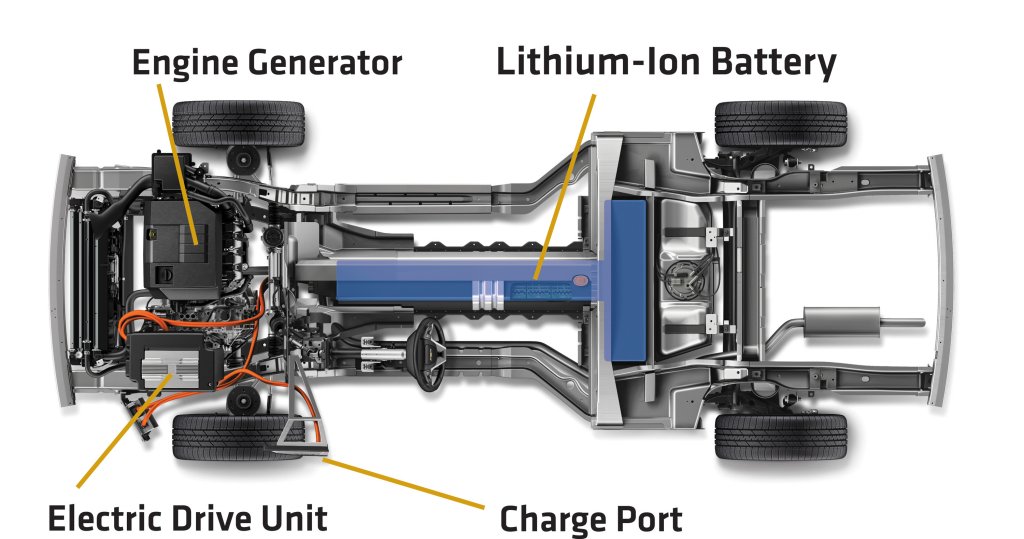
VIA has developed a powertrain that includes a 24 kilowatt-hour lithium-ion battery pack, which can last up to 40 miles per charge. The gasoline engine is for generating electricity to run the electric motor, which moves the wheels. The company is putting its technology in brand new vehicles only, not used cars. When VIA Motors showed up at the Detroit auto show, its executives rattled off a list of things that people can do with vehicles that double as power generators, such as catering to outdoor parties and running outdoor concerts.
“Think of a 3-day camping trip where you have unlimited power with the car you drive into the woods with,” said Bob Lutz, a member of VIA’s board of directors and the former vice chairman of GM, during a press conference at the auto show.
The two VIA trucks PG&E has been trying out cost about $400,000 total, Meisel said. The trucks are the early version of what VIA plans to produce commercially later this year, Meisel said. The price for the trucks at “low volumes” should be in the $70,000 range, and it should continue to drop as production increases, he added.
VIA isn’t the only company PG&E is turning to for converted hybrids with exportable power. The utility also is considering vehicles from Electric VehicleInternational , which turns beefier pickup trucks to plug-in hybrids. VIA’s truck delivers 15 kilowatts of exportable power and is working on boosting that to 50 kilowatts while Electric Vehicle International is working on trucks with 100 kilowatts of exportable power. Figuring out a good way to cool the equipment that generates and routes the power becomes a greater hurdle as the size of exportable power increases.
PG&E and other fleet owners are turning to companies that can do after-market conversion for now partly because major automakers have yet to introduce the plug-in hybrid version of the trucks that the fleet owners want to buy. But that day will come if consumers continue to show interest in electric cars (and the prices for them drop). When that happens, companies such as VIA Motors may find it difficult to compete, said Kevin See, an analyst with Lux Research.
“There may be a short-lived window for them to make their mark,” See said. “I wouldn’t expect their businesses to be long-term because of the competition that will enter the market.”
2012-01-24 15:00:49
Electric vehicle owners can get a ‘charge’ in Media now
By: Susan L. Serbin
Filed Under: Electric Vehicles
Media Borough has created another reason to make “Everybody’s Hometown” a destination. This time an initiative will make downtown the hometown for owners of electric vehicles (EV).
As only the third known location in Delaware County, Media has inaugurated a charging station in the municipal parking lot next to the Media Fire Department, across from Media-Upper Providence Library and one block from all that State Street has to offer. The borough is participating in a pilot project for EV charging powered by 100 percent Pennsylvania wind energy. Borough officials and Community Energy, Inc. had the ribbon cutting recently, with attendance by representatives of the energy firm, Mayor Bob McMahon, Councilman Eric Stein, Environmental Advisory Council Chair Walt Cressler and several other borough staff member. While the technology includes several cutting-edge elements, charging station operation is fairly simple: pull into the dedicated parking space (lot is between Jasper and Front streets just east of Jackson Street); plug the electric vehicle (EV) into the charger; dine, shop or attend to other borough business. In the span of an hour or two, EVs can be charged enough for at least several dozen miles. “We are pleased to be partnering with Media Borough and the Media Fire Company as this becomes one of the first charging stations in the county,” said Jay Carlis, Vice President of Retail Marketing for Community Energy, Inc. based in Radnor. “This pilot project, funded by the Pennsylvania Department of Environmental Protection, comes early in the electric vehicle transition. At the government level, Media has been a leader in environmental sustainability. This is a great location for residents and visitors.” Carlis said there are charging stations in Radnor and Wayne and only a handful in the state, placing the borough in the forefront of the technology. To kick off the enterprise, he drove a Chevrolet Volt and hooked it up to demonstrate the virtual plug, charge and go technique. Representatives from Thomas Chevrolet brought a second Volt. Amy Ercolani of Thomas said the dealership has sold several Volts, has one in stock, and expects the manufacturer to supply a small but steady stream of the model, which has a gasoline back-up capability. EVs are available from other automotive manufacturers as well. Running at a 240-volt service, the public station works twice as fast as a charge from, for example, a home outlet which is generally half the volts. An hour charge is expected to cost $3.50 with Community Energy paying a fee to the borough for the actual electric used. The mileage value of a charge varies depending on vehicle and road conditions, not unlike gas mileage. Not surprisingly, there are “apps” which can monitor the charge from mobile devices. In the borough’s view, the station sends multiple signals about the alternative energy commitment which already includes a solar energy grid and wind-generated electricity purchase. “I’m a strong supporter of renewable energy. I have solar energy at my home, so I’m not just talking theoretically,” said Stein, liaison to the Environmental Advisory Council. “It’s good for the economy, and good for the environment.” Continued...
2009-03-13 07:25:30
General Motors and Iberdola to study EV charging infrastructure in Spain, UK
By: Sam Abuelsamid
Filed Under: Electric Vehicles
General Motors will be
collaborating with Spanish energy company Iberdola on a feasibility study to
determine the infrastructure needs to support plug-in vehicles in Europe. Similar
studies are underway already between automakers and utility companies in the
United States and elsewhere. The two companies have a relationship through
other projects being run by EPRI. Under examination will be the needs for
private, residential, and commercial customers as well as for publicly-accessible
vehicle plugs. Among the issues that need to be resolved are how rates will be
determined for vehicle charging and billing mechanisms. The study will be
focused in Spain and the UK.
2008-09-30 07:53:54
Chrysler Unveils Dodge EV
By: Ray Wert - Jalopnik.com
Filed Under: Electric Vehicles
A Tesla-Like All-Electric Sports Car
Today on CNBC , Chrysler CEO Bob Nardelli revealed a Tesla
-like all-electric performance sports car called the Dodge ev along with three
other vehicles operating either partially or entirely on an electric powertrain. The
four vehicles are Chrysler's ENVI electric car program, and include an extended
-electric Chrysler minivan, a new "gated community" electric called "the peapod"
and a Jeep Wrangler four-door. The ev, the first of the four unveiled, not only
operates entirely on plug-in power like the Tesla Roadster and
appears to have similar performance numbers, also has some striking visual
similarities with the Tesla. And why shouldn't it? While the Tesla's built on the
Lotus Elise , the Dodge ev appears to be based on the Lotus Europa .
2008-08-14 12:56:49
Utilities: Grid can handle influx of electric cars
By: AP
Filed Under: Electric Vehicles
Which draws more juice from the electric grid, a big-screen plasma television
or recharging a plug-in hybrid car?
The answer is the car. But the
electricity draw by plasma televisions is easing the minds of utility company
executives across the nation as they plan for what is likely to be a conversion of
much of the country's vehicle fleet from gasoline to electricity in the coming
years.
Rechargeable cars, industry officials say, consume about four
times the electricity as plasma TVs.
But the industry already has dealt
with increased electric demand from the millions of plasma TVs sold in recent
years. Officials say that experience will help them deal with the vehicle fleet
changeover.
So as long as the changeover from internal combustion
engines to electric vehicles is somewhat
gradual, they should be able to handle it in the same way, Mark Duvall, program
manager for electric transportation, power delivery and distribution for the
Electric Power Research Institute, said Tuesday.
"We've already
added to the grid the equivalent of several years' production of plug-in hybrids,"
Duvall said at a conference on electric vehicles in San Jose. "The utilities, they
stuck with it. They said, 'All right, that's what's happening. This is where the
loads are going, and we're going to do this."'
Automakers, such as General Motors Corp. and Toyota Motor Corp. , are planning
to bring rechargeable vehicles to the market as early as 2010. But speakers at the
Plug-In 2008 conference say it will take much longer for them to arrive in mass
numbers, due in part to a current lack of large-battery manufacturing
capacity.
Read More
2008-08-14 12:49:37
A New (Good) Look for Electric Cars
By: JACK LOSH / LONDON
Filed Under: Electric Vehicles
Electric cars have been around for almost 170 years, but it's not
just the limitations of battery power that have thwarted their more widespread
use. Since Scottish businessman Robert Anderson pioneered the first electric
carriage in the 1830s, most electric vehicles have lacked one of the key markers
of auto success: good looks. Just take a look at La Jamais Contente, designed
by Belgian Camille Jénatzy in 1899, or Billard and Zarpe's space-age
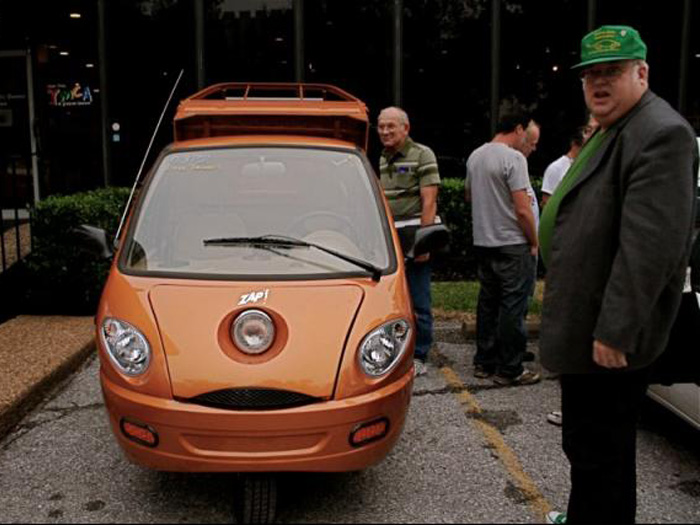
oddity, the Elektra King (1961). Even today's models — the REVA , or Zap!'s Xebra — are proof that the best adjective to
describe most electric cars remains quirky.
Now two new
models show that green can be given a devastatingly cool makeover. Britain's
Lightning
GT and the U.S.-built Tesla Roadster both reach 60 m.p.h. in 4 seconds or less,
their makers claim, with top speeds approaching 130 m.p.h. The Lightning GT
— unveiled at London's International Motor Show last week and set to be
available from the end of 2009 — sports an impressive, sleek and sexy
design, drawing on Aston Martin's classic British look. Tesla, which launched its
hot, little open-top two-seater a couple of years ago, has already sold out of the
2008 model and is eagerly taking reservations for 2009. Battery power has rarely,
if ever, looked this good.
Read More
2008-08-14 12:14:39
Converting gas-powered cars to electric
By: Curt Merrill - CNN
Filed Under: Electric Vehicles
Larry Horsley loves that he doesn't buy much gas, even though
he drives his '95 Chevy S-10 back and forth to work each
day.
Horsley, a self-described do-it-yourselfer, simply plugs his truck
into an electric wall outlet in his Douglasville, Georgia, garage and charges it
overnight, instead of buying gasoline refined from mostly imported
oil.
"If I can keep a dollar from going overseas, I'll spend two dollars,"
he said. The whole conversion, including the truck, cost him about $12,000,
which parts dealers say is about standard.
Another Atlanta-area
tinkerer, David Kennington, converted his Honda Civic del Sol from gasoline to
electric for a different reason: "I'm a raging greenie," he said.
Both
Horsley and Kennington are fed up. They're among a growing number of
Americans who are refusing to wait for big-car manufacturers to deliver
mainstream electric vehicles , called EVs. Not
only have they rebelled against the status quo by ripping out their gas-guzzling
engines and replacing them with zero-emission electric motors, they say just
about anyone can do it.
Rea
d More